Skip to content

Archive for

Home is Sweet in NBA’s Second Round

Hedo Turkoglu held the ball as time expired in Game 4 of the Magic-Pistons series. With four seconds left he drove to the left, created separation and tossed up an off-balance floater that came up short. Dwight Howard’s follow also missed. Two good looks. Two misses.

The buzzer sounded and the Pistons won the game, 90-89.

More telling, Detroit became the first team to win on the road in the second round of the 2008 playoffs. Through the first four games of each second round series, home teams are 15-1. After witnessing Turkoglu and Howard’s successive point-blank botches, one can only think how close it has come to a clean-home sweep thus far in the conference semifinals.

That one home “L”, endured by Orlando, enabled the Pistons to carry a comfy 3-1 series lead back to the Motor City. The other three series (Lakers-Jazz, Hornets-Spurs, Celtics-Cavs) are all knotted at home-cooked 2-2 splits.

Historically, it is very tough to come back from an 0-2 deficit — only 13 teams have done it; most recently Cleveland against Detroit in the 2007 Eastern Conference Finals. However, much is made of “momentum swings” in playoff series, and judging from the way Utah, San Antonio and Cleveland have played since going down 0-2, it is safe to say they all have the momentum on their side heading back on the road.

The Lakers, Hornets and Celtics each find themselves in the undesirable position of having squandered a 2-0 lead, and are currently having to answer questions about what went wrong and how they will be affected going forward. The pressure is on them, the perceived favorites.

Here’s where the “momentum swing” argument fails though: In all three of the even-steven matchups, teams have systematically dominated on their home court, and been undressed on the road.

The Lakers beat the Jazz twice at Staples Center, by an average of 10.5 points. They defended, ran the floor, and moved the ball with almost effortless fluidity. Games 3 and 4 in Salt Lake City? Not so much. While the Lakers lost a couple of close games (104-99 and 123-115 in OT), their ability to dictate the pace of the game–and more importantly, prevent Deron Williams from doing so–vanished.

They frequently played from behind, and in Game 4 when Kobe was in pain and trying to do too much, the only reason they forced overtime was because Derek Fisher and Lamar Odom went on simultaneous fourth-quarter tears (10 points a piece).

The Hornets-Spurs series (aka the “third quarter series”) has seen the home team win every game by double digits. Close games have turned into blowouts in the third quarters, with the Hornets holding a 65-35 advantage in third quarter scoring in New Orleans. The Spurs have returned the favor in San Antonio, running the Hornets of out Games 3 and 4 by an aggregate 59-41 in the third period. The games have turned so lopsided it hasn’t even been worth watching the fourth quarters in this series.

Finally, there are the Celtics and Cavs. Boston, the team that began the trend with its head-scratching futility on the road against the Hawks in round one, has ceased to regain the form that won it a league-best 31 games on the road in the regular season. After holding Cleveland to under 74 points in both games at TD Banknorth Garden, the Celtics gave up 108 and 88 at Quicken Loans Arena in Games 3 and 4.

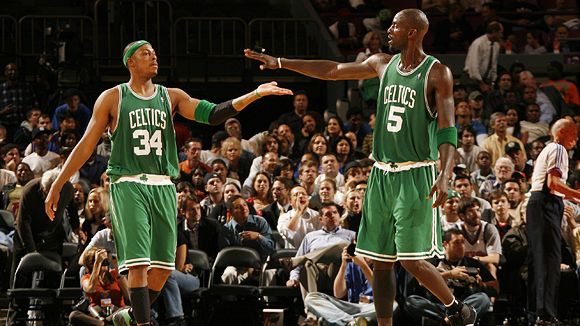
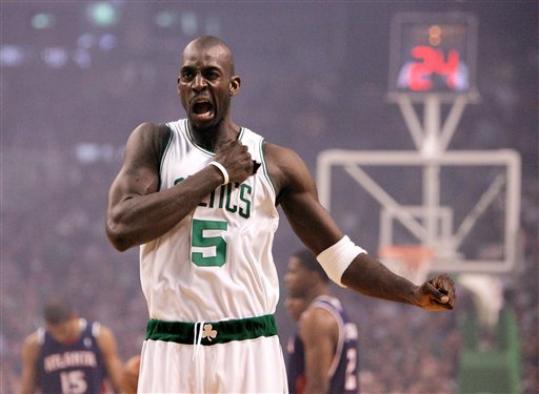
They have been unflappable at home (Kevin Garnett took over Game 1 in the final 90 seconds), and have thoroughly flopped on the road. If there is a silver lining to the Celtics concerning home/road discrepancy, it’s that the other second round matchups combined have become a microcosm of the Celtics entire playoff run. Boston is 6-0 at home, and 0-5 on the road. Not including the Celtics-Cavs series, home teams are 11-1 in the second round.

A case study of these playoffs would indicate that home crowds in general have become louder and more rambunctious, that they have more decisively affected the outcomes of games than ever before. That is false. Just ask Lakers fans who inhabited the LA Forum during their run to four titles in the 80s. Or Celtics fans who deafened opponents in the Boston Garden over three decades and 16 NBA championships.

The real explanation for this peculiarity is parity. All the teams still standing are very good. None are great. The Spurs are the closest thing to a great team, but their most dominant days are behind them. Are they still capable of winning a title? Yes, but they will never again do it with the brutal efficiency of past Tim Duncan teams.

It may appear that the Spurs, along with the Jazz and Cavs, have it all going at the right time. Momentum can be deceiving, though. It obviously frustrates the Hornets, Lakers and Celtics, having given up 2-0 advantages — but they still understand they aren’t going anywhere until someone comes into their house and slams the door shut.

MLB “Cinco de Mayo” Fantasy Points

It’s Cinco de Mayo. 30 games are in the books. You know what that means.

Time to begin critically evaluating your fantasy team.

What is your injury situation? Who has underperformed? Who has exceeded expectations? Do you have good balance between offense and pitching? What’s the greater makeup of the league you are competing in? How are you feeling about your squad?

Unless your team is sitting pretty at the top of the standings, chances are you have concerns; chances are most, if not all of the above stated questions are relevant.

Let’s tackle the most cut and dry topic first: Injuries. They are often unforeseen, and are usually unavoidable. That goes for real and fantasy teams alike. Whenever a blue-chipper goes down, a ripple effect ensues. What’s interesting so far this year is that injuries to big name players (Jimmy Rollins, Alfonso Soriano, Scott Kazmir, John Lackey) have had no negative impact on their clubs.

The Phillies and Angels have withstood the losses of Rollins and Lackey; both lead their respective divisions. The Cubs are two games ahead of their pace from last year (18-13 as opposed to 16-15) despite the loss/abysmal start of Soriano. And the Rays just polished off their best April in team history without the services of their ace, Kazmir. Even predictable injuries to Rich Harden and Pedro Martinez have not slowed down their clubs. The A’s and Mets are each within a game of first place in the loss column.

Fantasy owners haven’t been so lucky. While guys like Pedro and Harden have become mid to late round “high risk/high reward picks”, Rollins and Soriano are first and second rounders; Kazmir and Lackey are frequently among the top 10 or 15 starters chosen. Their absence has been an early critical blow to fantasy teams far and wide, specifically in roto leagues.

Even though Lackey and Rollins are close to coming back (Kazmir and Soriano are already playing again) their roto value is automatically diminished because of the time they missed. Barring a supersonic final five months from these guys, you can expect about a 15 percent drop-off in their 2008 stats. Because every fantasy team is built around a few choice stars like them, that can be the difference between a top-three finish and middle of the pack.

In head to head leagues, as long as your team isn’t buried in the standings today, you’ve got nothing to worry about. Since cumulative stats don’t matter in head to head, it’s of no consequence that Lackey finishes with 14 wins instead of 18 or that Rollins scores 108 runs as opposed to 135. You will still maximize their production from here on out.

The next major issue confronting fantasy owners is trying to diagnose the poor starts of established blue-chippers. Jose Reyes, David Ortiz, Ryan Howard, Justin Verlander and Travis Hafner headline this category. With the exception of Hafner–who seems to have lost his craft–roto owners should not be sweating the paltry numbers put up by those perennial fantasy catalysts. Play them everyday; when all is said and done the numbers will be there.

This time it’s the head to head owners who must start rethinking strategy. Since stats are only accrued on a weekly basis, consistently starting a slumping-Ortiz (.216/5/24) or Howard (.167/6/14 and 45 K’s) can be detrimental. They currently carry too much baggage to warrant putting them out there everyday. Of course there’s always the chance they’ll go off for multiple home runs on any given night, but so goes the double edged sword that is head to head fantasy management.

Be it head to head or roto, it is frustrating to managers that the Howards and Verlanders have been so unproductive, but baseball is a long season. The players we have talked about are too good at what they do to fizzle for longer than what equates to a small sample size (again, with the exception of Hafner).

Looking at the other end of that spectrum is important as well. That’s right; role players who have far exceeded expectations to the point of becoming overvalued. Xavier Nady (.347/4/30). Nate McLouth (.323/7/25). Josh Willingham (.341/6/16). Ryan Church (.318/4/22).

All are on ridiculous, career defining paces at the moment, but all will come back to earth sooner or later. This can be a delicate situation in roto leagues. Ideally for each fantasy manager employing a Nady, that manager also has a Howard. That way when the sample size becomes larger (ie when Howard turns it up and Nady levels off), the players will continue to offset one another and the overall team quality will be sustained.

However, if Nady is carrying your team and you’ve suffered no major injuries or slumps, it might be time to make a move. Maximize his selling value now and see if you can’t shore up a weakness (this is a good time to address bullpen issues). Of course, making deals requires having a feel for the climate of the league — are the managers generally tight, therefore hesitant to make deals (designated NBFT: Need Based Fantasy Trader)? Or are they ready and wanting to trade at will (designated CFT: Compulsive Fantasy Trader)?

If you’re in a league with primarily CFTs, don’t hesitate and wait for the other shoe to drop. Now is the time to sell high. If there are predominately NBFTs in your league, keep an eye on the waiver wire, maintain faith in the players you drafted, and wait another month or so before pondering deals. That’s what the real GMs do.

Celtics Back on Planet Earth

It is the series that wasn’t supposed to be. The series that still is.

The Celtics-Hawks … series??

Just a bit embarrassing for a 66-win team that expected to win four games on cruise control — especially in light of the thrashings administered in Games 1 and 2. But sometime after Game 2 in Boston and somewhere below the Mason Dixon Line, the Celtics lost their mojo. They were clearly without it when they arrived at Phillips Arena in Atlanta for Game 3.

They definitely didn’t find it again until they got back to Beantown for Game 5.

Now, with the Green set for a return to the deep south for Game 6–a game that until Monday was supposed to be permanently tagged “if necessary” on the schedule–I can’t help but think: Maybe this was a good thing.

Maybe the Celtics needed a jolt of life. Maybe they needed to hear the words “greatest choke in Boston sports history” tossed around the city between fans and writers in a karmic game of catch. Maybe they needed to wake up and smell the playoffs.

The Celtics played an entire 82-game season on a higher plateau than the rest of the league — in terms of both intensity and performance. Their critics (who also happen to be Kevin Garnett’s critics) have been saying it all along — that once the playoffs begin and the intensity level rises, teams will be able to close the gap on KG and the Celtics.

The numbers are there to back up the theory. Going back to 2001, the only team to win a title after posting the best regular season record in the league was the 2003 Spurs (and Dallas matched San Antonio’s 60 wins that year). Recent notable unforeseen playoff exits by regular season giants include the 62-win Suns in ’05, and the 64-win Pistons in ’06.

Who can forget last year, when Dallas won 67 games before winning all of two in the playoffs against Golden State.

Thus the theory is sound.

The theory being that it is tough to sustain such a consistently elite performance level when the slate is wiped clean and the competition becomes tougher. For those regular season juggernauts, the record next to the name served to reinforce that air of invincibility for the better part of six months. However, once the playoffs begin and that record disappears, opponents use it as fuel.

What’s more intimidating? The 66-16 Celtics or the 0-0 Celtics?

That’s just it; perception is reality. Obviously the Celtics know how good they are, and with such an apparent round one mismatch on their hands, those 66 wins swelled up their heads when in fact they should have been relegated to the recesses of their collective consciousness.

The Hawks on the other hand, heading back home, saw 2-0. It may sound simplistic but a 2-0 team is eminently more beatable than a 66-16 team. And what happened? The older and cockier Celtics got beaten down by the younger and more exuberant Hawks. Not once, but twice.

Were they panicking when they left Atlanta tied (or better yet, down) 2-2? No. But they were perplexed. They were forced to reevaluate, forced to reflect — not on 66 wins, but on two losses.

What they learned as a result of that reevaluation was that for two games against Atlanta they got away from the traits that had truly defined them all season: defense and hustle.

They didn’t contest shots. They did a miserable job of containing the penetration of Joe Johnson. They allowed Josh Smith to run circles around them.

Most importantly, they got outplayed by a team that showed more grit and simply wanted it more than they did (see: Al Horford and Zaza Pachulia).

So how can all that be construed in a positive way? Because the Hawks were never going to beat the Celtics, even they know that deep down. But the Celtics were inevitably going to suffer a lapse. That’s what happens when you’re wearing a bullseye on your back. Usually in the playoffs, a lapse equates to elimination. Against any other team, particularly the team (Cleveland) likely greeting Boston in the second round, such a lapse would have been fatal.

Consider it a get-out-of-jail-free card.

Now the question becomes can the Celtics channel this infusion of life the feisty Hawks have given them? Can they now re-begin the playoffs in the same fashion they began the regular season?

The answer will come in a Game 6 nobody ever thought was going to happen in the first place.

Superstars = Super NBA Playoffs

Suns-Spurs started it all. Chris Paul took over from there. Dwight Howard really did become Superman. Then there are those Kobe, Lebron and Garnett guys. They looked pretty good too.

The playoffs have only been in session five days, but already the performances have superseded the hype. (For the record, before this season I could have never envisioned writing that last sentence in reference to the NBA.)

Seriously though, TNT’s annual, unrelenting “40 Games in 40 Nights” promo used to be a deterrent that bordered on a turnoff to the casual NBA viewer. 40 games! 40 nights! If you watch them all you are officially a loser! TNT!

Now I’m counting off the days like you do on vacation. Five down, only 35 left… %$&#!!! Must have more TNT!

Excuse me for being blunt but if you’re a sports fan not watching these playoffs, well then, there’s just something wrong with you.

Now, let’s look at the aforementioned super-duper-stars, and use a Q+A format to help clarify what they may have in store for us giddy basketball fans…

Kevin Garnett

What can already be determined? That KG can smell it. It doesn’t make a difference that the Celtics are playing a team 29 games worse than them. It’s of no significance that each of the first two games has been over by the six minute mark of the second quarter. And it’s utterly inconsequential that a few boneheads on the Atlanta Hawks have actually had the audacity to suggest that 1) Celtics fans are bandwagon hoppers, and 2) their 37-win team matches up well with the 66-win Celtics and is capable of pulling the biggest upset in NBA playoff history (hey there Mike Bibby and Joshes Childress and Smith … better get those 9-irons polished). Once again, all that means nothing. If you’ve watched the first two games of this series and seen Garnett pummel Leon Powe after a huge dunk and claw at his jersey in the waning minutes of 20 point blowouts, then you see what I see. The man has picked up the scent. He’s honing in on it.

On a scale of 1 to 10, what is his “can win a series by himself” potential? 9.8 out of 10. KG doesn’t get the full 10 out of 10 because as dominant and intense as he is, he’s never been the go-to guy to take the last shot in a decisive playoff game. Part of that is because defenses collapse on him late in tight games. Another part is because he will have primetimers Pierce, Allen and Cassell lurking in his periphery when daggers must be dropped. But that doesn’t mean he can’t solely dictate a seven-game series. (Or four seven-game series’.)

What’s the verdict on the Celtics? (fingers experiencing uncontrollable spasms) N o .. Ba LL GAm E …. J I nX!!!!

Dwight Howard

What can already be determined? That Dwight Howard need not don the cape to validate his status as the hero reborn. What he did in the slam dunk contest this year transcended the event. What he is going to do to the rest of the league over the next decade may very well transcend the game (11-foot baskets?). What he has already done to Toronto is unkind. That would be score 54 points, beast 42 rebounds, and swat eight shots in two games. So… Yeah…

On a scale of 1 to 10, what is his “can win a series by himself” potential? 9.9 out of 10. A tiny notch ahead of Garnett because of his age but still lacking the perfect 10 because it is possible to get the ball out of his terrifying hands at the end of games. In fact, these playoffs will probably spawn the “hack-a-Howard” strategy because he only shoots 59% from the free throw line. Of course there’s always the chance that in crunch time he will shed would-be foulers like ants. He truly does have the power and quickness to unilaterally overrule futile foul attempts. That said, if you’re an opposing coach, you simply can’t let Dwight Howard throw one down in the last seconds of a tied playoff game. If it must entail lining up a wall of oversized pawns to thwart him, so be it. It must be noted that Howard’s options on the perimeter (Hedo Turkoglu and Rashard Lewis) for a game-winning kick-out are not as reliable as KG’s. That will inevitably mark Superman’s downfall (this year at least).

What’s the verdict on the Magic? A loss in Game 6 of the Eastern Conference Finals to Boston (yes, that means the season-long anticipated showdown between the Pistons and Celtics will never happen because Dwight Howard says so).

Lebron James

What can already be determined? That the regular season means NADA to Lebron James, and that slights from alleged colleagues tend to rattle the King’s cage. I mean, is DeShawn Stevenson for real? Did he really go on record as calling Lebron “overrated”? The next time he gets posterized by King James with the quote “overrated” sprawled across the top does he get a copyrighted piece of the glossy-revenue? What–for goodness sake–was this guy thinking? Not a wise move considering Lebron has made it a habit of burning anyone who questions his greatness.

On a scale of 1 to 10, what is his “can win a series by himself” potential? 10 out of 10. I believe he addressed that matter in Game 5 against Detroit last year. He then closed the case in Game 6, and in doing so established the modern-day standard for “player who singlehandedly carries a team to a higher place in spite of omnipresent mediocrity”. He reiterated it for Stevenson and any other stupid loudmouths in the first two games against Washington, popping off for 32-6-4 and 30-9-12, respectively (against a solid and peaking Wizards team, no less). Lebron may have a new supporting cast of “Boobies”, and he may be trying to defend his Eastern Conference crown in a bracket that has the Celtics looming in round two, but don’t speak too soon about the fella. I believe DeShawn Stevenson already learned that lesson the difficult way.

What’s the verdict on the Cavs? Out in 6 against the Celtics, with Lebron achieving some superhuman feats to win Cleveland’s two games (obviously).

Chris Paul

What can already be determined? That Chris Paul fears not the playoff stage. He wasn’t just the best player on the court in the first two games against Dallas; he was by far the best (and Dirk Nowitzki has played well). In Game 1, with David West struggling to find a rhythm early on and Peja Stojakovic hoisting up bricks, the Hornets found themselves in a 12-point halftime hole. No sweat for CP3. He took over in the second half, turned a double digit deficit into a blowout opening win, and helped usher in the return of the “Mark Cuban Face”. Not bad for a playoff rookie.

On a scale of 1 to 10, what is his “can win a series by himself” potential? 10 out of 10. His 35 and 10 preceding 32 and 17 (plus a combined seven steals) in fact weren’t what stuck out the most. (And no, I’m not munching on the magic brownies.) It was the way he carried himself; the way he carried his team. In the tone-setting Game 1, each bucket he dropped and dime he dished was accompanied by a progressively meaner and more confident look in his eyes. Chest pounds and cries of “Let’s go!” had Hornets fans smelling blood and Mavs players anticipating the imminent (which was also the psychological precursor to the beating Paul gave them in Game 2). His intensity level was so high he appeared ready to take the contest into the parking lot after the game. We haven’t seen that from Dirk since Game 7 of the Spurs series in 2006. I’m surely not the first to say it, but I won’t be close to the last: We are witnessing the beginning of what may become the greatest career by a point guard all-time. His ceiling extends far beyond the bannerless rafters inside New Orleans Arena.

What’s the verdict on the Hornets? A Game 7 loss in the Western Conference Finals at Staples Center, and a born-legacy (not to be confused with “The Bourne Legacy”).

Kobe Bryant

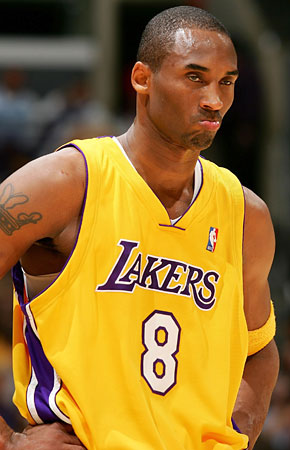
What can already be determined? That Kobe Bryant was frustrated and wanted out of LA, then he was angry when he didn’t get moved, then he didn’t care, then he cared again, and now he’s on a mission that evokes memories of Denzel Washington in “Man on Fire”. There is no debate that Kobe has been the best player since MJ — when he has chosen to be. Somewhere along the way, a combination of scandal, a big head and a “diesel” Hollywood breakup temporarily stripped him of his unmatched talent and boyish love of the game. What a difference a “Pau” in the arm can make. Now Kobe has the Euro version of KG in Pau Gasol along with a young and eager supporting cast whose collective vibrancy must remind him of glory days past. Beware of the Black Mamba.

On a scale of 1 to 10, what is his “can win a series by himself” potential? 10 out of 10. See above: “best player since MJ.”

What’s the verdict on the Lakers? NBA Finals. Boston. Game 7. I will say no more.

Portrait of Portsmouth

The journey begins at an upscale condominium complex in North Jersey. Dick Kaner is already standing outside, ready to roll, ready to embark on his 37th consecutive trek down the Atlantic coast for the Portsmouth Invitational Tournament (PIT).

Like many in his profession of professional basketball scouting and representation, Kaner has just returned from the Final Four. Throughout the basketball spectrum, Portsmouth, Virginia is the next (and most out of the way) stop on the flexuous road that will end in New York for the NBA Draft on June 26.

Each year, 64 elite seniors from around the country are invited to partake in a four day tournament and showcase, which is attended by representatives from every NBA team, as well as scores of hungry, competing agents. Only a few players will be drafted, but all will be ostensibly coveted. “It’s a feeding frenzy down there,” says Stephen Percudani, an up and coming agent who is letting me accompany him. “The first time you get there, you feel it.”

I’m already feeling it—the sensation in your legs as they fall asleep, that is–laid out in the backseat of Percudani’s Volvo, listening as Kaner makes preliminary contacts and “Perc” further details the swarm of basketball bees simultaneously converging on the southernmost point of the Chesapeake Bay.

As we head down the New Jersey Turnpike and into Delaware, Kaner has only one thing on his mind — surprisingly, it’s not basketball. “Chick-fil-A,” he states with purpose. “Best chicken sandwich you just can’t get up north.”

After we locate the notorious poultry stop and chow on tasty chicken and seasoned waffle fries smothered in honey roasted barbeque sauce, it’s back to the road. The last leg of the trip entails shooting down the Eastern Shore of Virginia and over/through the Chesapeake Bay Bridge-Tunnel.

Kaner touches base with the European clubs he is scouting for at the tournament. Perc, meanwhile, opines on the pilgrimage-like nature of the trip. Portsmouth holds sentimental value to him, as it was the last place his father, Dick Percudani—a revered basketball mind and director of scouting for the Phoenix Suns—watched a game.

———————-

Marty Blake, director of NBA scouting, steps to center court of the Churchland High School basketball court. “Will Richard Percudani please report to the scorers’ table?” he asks over the public address system. Stephen Percudani knows that’s his cue and heads down to the floor to hand out the award for excellence in basketball scouting that is given in his father’s name each year.

With that, the 56th annual Portsmouth Invitational Tournament signs on.

Churchland is easily the only venue you’ll ever see containing as many familiar faces as fans. On one baseline sits scouts row, a three-tiered hub of operations for all the major representatives of NBA teams.

Larry Bird, general manager of the Pacers, arrives in a cream colored button up shirt and takes his seat in the second row. He’s flanking his old partner in hardwood crime and fellow GM, Kevin McHale.

Moments after the opening tip of the first game, in walks Danny Ainge. Wearing a backpack and attired in a white long sleeved T-shirt with a green vest, Ainge spots McHale. Lighting up like a kid on the street court who sees his superstar friend arrive to join the team (We got Kevin!!!!), the Celtics GM does a beeline to his former teammate and recent trading partner.

He gives the Timberwolves’ general manager a playful pat on the back and the two exchange fraternal pleasantries. I wasn’t close enough to hear their conversation, but given Ainge’s animation (and the Celtics’ 66 wins), I would imagine it went something like this:

Ainge: (patting McHale on the shoulders) Who’s the man??

McHale: I am, Danny. I’m the man.

Ainge: You are THEEE man!!

McHale: You were right, Danny. Jefferson’s dropping 21 and 11. And Gomes is pretty good too.

Ainge: Told you it would look fair!!

The two buddies continue to mirthfully shoot the breeze, but they are the exception. Save for a bit of idle chit chat amongst evaluators, most of the scouts show they have long ago mastered the art of the poker face. Good play or bad, they exhibit no discernible change in demeanor or mood. Their most identifiable actions are the intermittent relocating of pen hands from underneath their chins to their notebooks in order to record an observation.

The vibe in the stands is quite different. The way Percudani had forecast it (“a feeding frenzy”) is apt. After a few jump shots and fast breaks, the intermingling of agents—engaging in a discourse that can best be characterized as hawkish—commences.

American agents (of which there are roughly 400) are scoping each other out; identifying and targeting the big shots (of which there are roughly 15-20), who may or may not also be their competition.

European representatives are numerous as well; their mission at Portsmouth is often times more important than the Birds and McHales. Since the PIT traditionally produces a handful of second round picks, NBA guys are evaluating everyone, but seeking out few. European agents, on the other hand, look at the PIT and see dozens of players ready to compete professionally overseas.

From Spain, France and other parts of Western Europe to Eastern European countries like Serbia and Montenegro and Bulgaria, scouts and agents from abroad are trying to strike deals with their American counterparts to increase the flow of ballplayers overseas. The growth of the sport in Europe has opened avenues for many ex-college athletes to make a living playing the game they love.

Walt Szczerbiak, father to Wally of the Cleveland Cavaliers, is plopped down in the bleachers, balancing an evaluation sheet on his right leg. He takes the time to shake hands with acquaintances during timeouts while telling me about his expansive basketball background.

As one of the earlier pioneers in bringing the sport to Europe, Szczerbiak played in the PIT in 1971 before going to Spain and winning three Euroleague titles with Real Madrid (1974, 1978 and 1980) in the country’s highest league, the ACB. He is now the official US representative of the ACB, and has been scouting talent at Portsmouth since he undertook the position in 1986.

He has seen things change over the years.

“In the old days you had a lot of guys that got to their senior year, but now since so many guys are leaving, you’re not getting that level [of talent],” says Szczerbiak. “They’re either in the NBA or they have potential to be a lot better than the kids that are here.”

Taking into consideration that trend, a lot of the time Szczerbiak’s task is to monitor the throng of agents and make sure the teams he is representing are getting a fair shake. “You know, agents are selling one thing,” he says. “My job is to utilize my contacts and put things in better perspective.”

Szczerbiak’s Portsmouth roots–like his array of contacts–run deep. In fact, when he participated in the PIT, there was only one person from the NBA there to evaluate him; a guy who opened the flood gates and helped turn Portsmouth into an annual destination for anyone associated with the league.

———————-

“If you’re with Dick Kaner, I don’t wanna talk to you,” Bob Ferry informs me. He pauses before looking up from his spot in the first row of the bleachers at center court. “I’m just kidding,” he says through a blank stare.

“But I’m not telling you anything.”

Ferry, twice the NBA Executive of the Year (1979 and 1982), was also the architect of the 1978 NBA Champion Washington Bullets. When he discovers I’m only probing his knowledge on the history of the PIT—and not trying to finagle sensitive player info out of him—he opens up.

“I came down here, I think it was about 1971. I heard about the tournament. I drove in from Baltimore. Then I drafted Kevin Porter, a very good player, and kept it secret. Then a couple of years later I drafted a kid by the name of Chuck Robinson, who was really a good player. And then the word got out that I was coming down here, and word went out to all these scouts.”

“It gradually just got bigger and bigger, more people found out about it and more scouts came, and a better quality of players started coming in and before you knew it, it basically worked its way to what it is today.”

While Ferry enjoyed having his own “pickins” for a period of time when the tournament was still a niche, he speaks with a justifiable sense of pride when detailing the evolution of the event. His one time diamond in the rough ultimately served as one of the launch pads to greatness for the likes of Rick Barry, Earl Monroe, Dave Cowens, Scottie Pippen and John Stockton.

As we watch one of the consolation games– this one pitting former Tennessee teammates Chris Lofton and JaJuan Smith against one another—Ferry talks about how the tournament has turned into a “job fair” of sorts. Watching the two ex-Volunteers go at it, matching threes while playing tight, aggressive defense, you can tell they are teammates no longer; only competitors vying and competing for the same looks.

Ferry sums it up: “These kinds of tournaments are it. These tournaments leave a strong impression on people. And for some of [the players], it’s the last one they got.”

———————-

The final buzzer sounds. A team led by Jamar Butler of Ohio State has just won the championship by a breezy 23 points. However, Butler, the tournament’s Most Valuable Player, is not even one of the three athletes from Portsmouth that NBADraft.net projects to have their name called by David Stern in New York.

There are whispers that this year’s tournament is collectively one of the weaker fields in recent past. For many—even those who excelled over four days—the dream may be fading. There are only so many jobs to be had in the NBA, after all (450 to be exact). But for those kids willing to take a chance and head overseas, a career is waiting for them.

As I’m wrapping up, the European agents are desperately trying to make some final lasting impressions with the athletes. I find Percudani, and just as we are preparing to exit Churchland one more time and hit the road back to the Tri-State area, I see someone familiar walking toward us.

After breathing all things basketball for four days, it feels like we picked up Dick Kaner from his condo a month ago. We talk briefly about Lofton and Smith, and the upcoming Orlando Pre-Draft camp. Kaner’s taking off with a friend later on, so won’t be riding north with us, but he does have some parting advice.

“Chick-fil-A,” he reminds us.

“You won’t get it in New York!”

Manny’s Still Manny

Someone needs to pass Manny the memo. You know, the one that tells him how not every long fly ball he hits is going out of the park, ending a game, and moving the Red Sox one step closer to a World Series.

Ever since his walk-off home run in Game 2 of the ALDS, Manny has found it necessary to watch the ball travel — even if it’s not traveling into four-bagger territory.

Since that bomb off Francisco Rodriguez, Manny has become Narcissus reincarnated. However, instead of falling in love with his own reflection, he falls in love with each deep drive he strikes.

Crack! goes the bat on the ball. Only then does he spring to life. His body language is as clear as the sky is blue. Oh the beauty! The power! The elegance! Oh Manny!

Manny’s eyes–with a little help from the arms usually raised over his head–say it all. He is in awe of, enamored by and totally smitten with his God-given and rediscovered stroke. He simply can’t get enough of it.

The opposition kind of already has, though.

Only four games have elapsed this season, and Manny has twice stood in the batters box to gaze at and admire not home runs. The trend began in Japan, when Manny launched a go-ahead two-run double in the top of the 10th inning against Oakland. Thing was, he thought it was destined to be a three-run homer, and stood in the batters box, watching as it … didn’t clear the fence. But hey, the hit still proved to be the game winner.

When he replicated the act in the final game of the same series back in Oakland, it wasn’t as well received. Mainly because the ball was caught. That’s right. Manny–standing proud and erect at home plate–watched a ball get caught.

Of course that finality only further fueled the ensuing comedy, as Manny trekked back to the dugout and, through giggles, tried to explain to David Ortiz et al how he really thought that one was gone. He gestured and illustrated and justified, while getting poked fun at by his teammates through it all. Anyone watching had a laugh.

You know who didn’t? The Yankees. Be assured that new Yanks skipper Joe Girardi is both aware of and not amused by Manuel’s antics.

The whole Red Sox-Yankees thing has become watered down the last few years, mainly because the intensity/hatred that festered between the teams during the 2003-04 heyday no longer exists. The relocations of Pedro Martinez and Gary Sheffield have had a lot do with that.

Remember the so called “market correction” of a few years back? Well I have a feeling that this year we may be in store for a “rivalry correction”.

Girardi has brought a new mentality to the Bronx — or brought back an old mentality perhaps. Whichever way you look at it, the Bombers are the one team that will not sit back and watch the Red Sox show them up. Joba Chamberlain proved as much last September, when he nearly shaved the beard off Kevin Youkilis’ chin with some high and inside heat. And this spring Girardi showed he was prepared to get down and dirty when he (likely) ordered Shelley Duncan to slide cleat-first into the nether-region of Rays second basemen Akinori Iwamura. The result was a classy Grapefruit League dustup.

Taking that into consideration, along with Boston beginning defense of its second title in four years, we may be looking at Sox-Yanks redux in 2008.

Plus there’s Manny. The guy’s loving life and swinging a sweet tune at the plate once again.

As for that memo? It could say a million different things, but all that really matters is Manny’s still Manny.

MLB Points: Opening Day ’08

If you watched baseball on Opening Day 2008–or caught Baseball Tonight or looked at the day’s box scores for that matter–one thing stuck out above all else: bullpen implosions. Out of 12 games, five involved bullpens blowing leads. In four of those contests, one or both offenses put up crooked numbers on opposing relievers in the late innings. Sure, it was the first day of the season and weird stuff tends to happen. Lest we forget, baseball is a sport of odd routines woven into a complex methodology.

So yeah, on day one of 162, lot’s can go wrong, and a fair amount usually does.

However, the failure of many arms late in Monday’s games was more than just a 5 a.m. wakeup call to teams only marginally sweating their bullpen situations — it was the earliest possible indicator of a bigger problem that has spread throughout the league.

Relief pitching has become a dying breed.

There are a handful of dominant closers along with an assortment of overpowering setup men in the game today, but nowhere near enough productive arms to consistently record the final six to 12 outs of ballgames.

After the first full slate of ’08, that issue couldn’t have been any more evident.

Detroit lost to Kansas City because its bullpen failed to prevent Justin Verlander’s inherited runners from scoring in the sixth inning. Then Denny Bautista gave up the winning run in the 11th. The White Sox endured three eighth-inning runs when Octavio Dotel couldn’t hold down a tie game in Cleveland. The Brewers and Pirates watched leads of three and five, respectively, washed away in the ninth inning before rebounding to win in extra innings. And the Phillies saw something of a return to normalcy — a tie game entering the final frame turned into a five-run deficit and a loss when Tom Gordon could barely record an out.

This is a theme that is going to be revisited this year more frequently than any manager –real or fantasy–is comfortable with.

Speaking of fantasy, let’s throw the fantasy spotlight on three important names who played decisive roles on Opening Day.

Fantasy Spotlight No. 1Tom Gordon Flash was nothing short of awful on Opening Day. Sent in to preserve a 6-6 tie against Washington, Gordon gave up five runs in one-third of an inning. He may be old (40) but he’s still owned in 60% of ESPN fantasy leagues. More importantly, he’s not just being counted on to fill in for Brad Lidge until Lidge gets healthy (which should be sometime in the next week or two).

He’s also going to have to be the guy to close games on an interim basis if and when Lidge starts again losing the mental battle that has plagued him since “the Pujols blast” of October 2005. If Gordon can’t answer the call, the Phillies will have no choice but to return Brett Myers to a closing role. Judging from Gordon’s opening act of ’08, the Phils better hope Lidge can keep it together. The bottom line for fantasy owners is Lidge still has great stuff. Gordon does not.

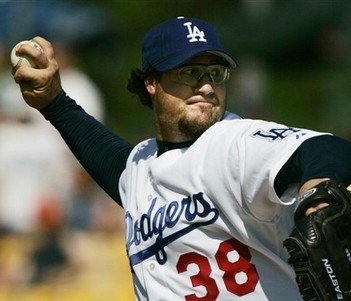
Fantasy Spotlight No. 2 – Eric Gagne How the mighty have fallen. Gagne may have a ring as a result of his service in Boston last year, but it seems to have come at the cost of his mojo. He was so bad in a Red Sox uniform that Terry Francona used him only in mop up situations last October. In his first appearance since receiving an utterly ludicrous $10 million deal from Milwaukee, Gagne picked up right where he left off in Beantown. Entrusted with a three-run lead in the ninth, he promptly gave up a hit, a walk and a game-tying homer to a rookie (Kosuke Fukudome) playing his first game in the US.

The only thing about Gagne that has been more discouraging than his performance is his body language. He hasn’t looked like he’s had any confidence in himself since last July when he was still a member of the Texas Rangers. This is a major concern for the Brewers as well as for all those fantasy owners who are counting on 25+ saves from Gagne.

Fantasy Spotlight No. 3 – Kosuke Fukudome If we’re going to talk about Gagne, Fukudome can’t be left out of the conversation. The guy crossed the globe, came to an organization that happens to be entering its 100th season without a championship, and in his first big league game went 3-for-3 with a game-tying home run in the bottom of the ninth. Forget justifying his potential with comparisons to the Ichiros and Matsuis of the world. I’m already sold.

Of course he’s not going to do that everyday, and will surely go through some understandable transitional struggles, but the makeup is clearly there. Like his countrymen, Fukudome is a professional. You don’t need more than a tiny sample size to see that the latest hacking Japanese import possesses a distinct stoicism. That in itself should do wonders for the most losing franchise in American sports.

MLB Preview 2008

The defending champs in Tokyo. Miguel Cabrera in Detroit. Johan in New York. Joe Torre in LA. Just a minor shakeup from a year ago, no? So how’s it all going down in 2008? Here are the thoughts of one scribe…

On the Outside Looking In

Arizona Diamondbacks (87-75) It’s tough to make the playoffs two years in a row, particularly when you can’t score runs. Last year the Diamondbacks scored 712 runs, fifth-fewest in MLB. They also surrendered 20 more than they scored, making them (by far) the only playoff team with a negative run differential. Good pitching and a pesky lineup one through eight got Arizona to the NLCS in ’07. Adding a second ace in Dan Haren to complement Brandon Webb would indicate the D-Backs are set to be even better in 2008, except there’s one major caveat. Jose Valverde and his 47 saves are now in Houston. The Diamondbacks won 90 games last year, but many of them were thanks to Valverde protecting one-run leads. Webb was a stud from mid-summer on last season, but Valverde was the MVP of the team. Without him, Arizona has uncertainty at the back end of their bullpen. No team wants to adopt a closer by committee. Especially one that needs to constantly protect tenuous leads late in ballgames.

Cleveland Indians (91-71) The following statement is going to make the city of Cleveland cringe (again): The Indians had their shot last year, and blew it. The optimistic outlook is the Indians have a solid and young core and will be competing for the foreseeable future. The pessimistic forecast has reigning-Cy Young winner C.C. Sabathia bolting town for a mega-deal after 2008 (he rejected a four-year, $68 million contract extension and unilaterally suspended talks until after this season). Fans of the Tribe know it was there for the taking last October. Those feelings of regret have been compounded by concern about the future. Which leaves the present. More bad news: The 2008 Detroit Tigers might boast the greatest offense of all-time. Cleveland will be good, just not good enough to return to October.

Into October…But Out

Los Angeles Dodgers (90-72/NL West Champions) The NL West will be the deepest division in the league. In the age of the unbalanced schedule, a stacked division means upwards of sixty games against quality opponents–not including interleague and interdivision play. That puts a premium on overall team balance. When good teams play one another over and over again, the team with the best balance will prevail. The Dodgers have consistent starting pitching (Brad Penny and Derek Lowe), good middle relief (Scott Proctor and Jonathan Broxton), and the best closer in the National League (Takashi Saito). With speed at the top of their lineup (Juan Pierre and Rafael Furcal) and power in the middle (an emerging-James Loney and Russell Martin), LA will avoid the scoring droughts that plagued them last year. Joe Torre’s cool and calm demeanor is also ideally suited for Southern California. The new skipper will lead the Dodgers back to the postseason, but not through it.

Atlanta Braves (91-71/NL Wild Card) Two consecutive seasons without playoff baseball at Turner Field? Are the Braves really still the third-best team in the NL East? On paper they are. But luckily they are looking up at a city and team that deal with high expectations about as well as Isiah Thomas deals with basketball contracts. The Phillies staged an impressive run last year to steal the division from the Mets, but let’s get something straight: the Mets CUH-LAPSED. The city of Philadelphia was still rubbing its eyes while the Rockies were in the process of sweeping away the Phillies in the NLDS. This is the pick I’m most ambivalent about. Both teams have good pitching, powerful lineups and closers who are suspect. I guess I’m going with the Braves because they’re still the Braves (and the Phillies are still the Phillies…)

New York Yankees (93-69/AL Wild Card) I hate sounding like a broken record but I simply refuse to pick against the Yankees in the regular season so long as Derek Jeter is taking the field everyday. Keeping an already established Joba Chamberlain in the bullpen is a wise move, because the Yankees biggest weakness will be their starting pitching. One man who hasn’t started at the big league level isn’t going to change a whole rotation. However, the one-two punch of Joba and Mariano Rivera will protect late inning leads for the Yanks when they have them. More importantly, they will help account for the inconsistencies of the New York starters. This team could find itself down big early in ballgames, but with its loaded and unrelenting offense and a couple stoppers at the end of the game, no deficit will be insurmountable for the Bombers (except the 0-2 one they’ll face against Detroit in the playoffs).

Los Angeles Angels (94-68/AL West Champions) An interesting pattern has developed the last six years. The Angels, Yankees and Red Sox have been the three most consistent franchises in the American League. Since 2002, all three have made at least four postseason appearances and averaged better than 91 wins per year. The Angels have had continued success by playing aggressive baseball; they steal bases, hit and run, squeeze. John Lackey and Kelvim Escobar are rocks at the top of their rotation; Scot Shields and Francisco Rodriguez have been as good as they come at the end of games. In October, however, that all changes. The Angels pitching staff cannot deal with the Red Sox offense, particularly David Ortiz and Manny Ramirez. The Yankees, meanwhile, can barely touch the Angels hurlers. Twice the Yankees have lost to Los Angeles in the playoffs (2002 and 2005), and twice the Angels have been defeated by Boston (2004 and 2007). What am I getting at? The Angels have established themselves as the class of the American League, right there with the Red Sox and Yankees. Seattle will push them hard, but LA will be back in October, albeit briefly.

Playing for a Pennant

Chicago Cubs (89-73/NL Central Champions) The Cubs dealt with their fair share of turmoil to begin the Lou Piniella era. Alfonso Soriano started the year in a prolonged slump and Carlos Zambrano was awful until he punched out his catcher. Once they got rid of Michael Barrett, Chicago started playing like most had expected going into the season. Still, they never seemed to click on all cylinders, and were blitzed by Arizona in the NLDS. This year, there will be stability in the clubhouse–or at least as much as there can plausibly be with Sweet Lou and Zambrano still prone to the occasional outburst.

No matter what, the Cubs won’t have to expend nearly as much energy and emotion in order to win a very bad division. If Kerry Wood can succeed as the closer, this team is built to make some noise in October. They have three horses at the top of their rotation (Zambrano, Rich Hill, Ted Lilly) and a lights-out setup man in Carlos Marmol. If they weren’t inevitably running into a team on a blood mission, I’d say the Cubbies were about to be closing in on their first pennant since 1945. Instead, 2008 will go down as another tantalizing, but ultimately unfulfilling campaign in Wrigleyville.

Detroit Tigers (101-61/AL Central Champions) Admit it. If you’re a fan of any team in the American League, you are dreading the first time your team and this team meet. The 2007 Tigers won 88 games and scored 887 runs. Then they went and added Miguel Cabrera and Edgar Renteria–who scored a combined 178 runs last year. So how many times will Tigers cross the plate in ’08? 950? 1000? More? Apologies in advance to pitching staffs in the AL Central, which will have no choice but to get abused by this sure-to-be historic offense up to 19 times a piece over the next six months. Detroit will be raking from April through September, and into October.

Why then are they not going to be representing the AL in the Fall Classic? Pitching. Specifically, their bullpen. It’s looking like Joel Zumaya will never be the pitcher he was, at least not this year. Fernando Rodney is mediocre, and he too is battling shoulder issues. That leaves the man who will be entrusted to get the final three outs, Todd Jones. His best days are far behind him. His recent past has been spotty at best (average of six blown saves and 4.10 ERA the last two seasons), and he hasn’t been able to get anybody out this spring (seven appearances, 15 hits, 11 earned runs, 14.84 ERA). Even backed by a legendary offense, that’s simply not going to cut it in a seven-game series against a team with a lockdown bullpen.

The Runner-Up

Boston Red Sox (96-66/AL East Champions) The Red Sox are in Tokyo as this column goes to publication. The trip, which will span 18 days and three countries, is great for the Red Sox brand and even better for the game itself. Theo Epstein and the Sox brass lured Dice-K and Hideki Okajima from Japan last year. They transformed the Boston Red Sox into a global enterprise. Then they won a second title for the first time in a century. As much as Hank Steinbrenner would like to deny it, Red Sox Nation is now multinational, multilingual, and carrying the torch into the next era of the sport of baseball. Assuming an ambassadorial role for MLB won’t come without consequences, however.

By the time the Red Sox finally return to Fenway–via the west coast and Toronto–on April 8, the entire organization is going to be gassed. Players have been forced to alter their diets (“lots of sushi” says a reinvigorated Manny Ramirez), sleep habits, and general routines. Terry Francona and his staff have basically assumed responsibilities of foreign dignitaries in addition to their daily duties as managers and coaches. And then there’s the simple fact of being on the road for an extended period of time to kick off the season. It’s not easy. The defending champs will be buoyed by the sustained reception they receive upon their return home, but it’s just not reasonable to expect them to come flying out of the gates in April like their calling card would indicate.

They will win the AL East, because they are better than the Yankees, but if anyone thinks they’re going wire to wire, think again. It will take time to shake off the Tokyo-jet lag, and come October, after the Sox have played the most grueling 162 games imaginable, in addition to another run through the American League playoffs, it will all catch up. The Sox won’t repeat as champions, but they will come damn close.

The Pick

New York Mets (98-64/NL East Champions) I thought that with a healthy Pedro Martinez in 2008, the Mets would be good enough to get back to where they were last year: on the brink of the NL East title and home-field throughout the playoffs. Frankly, though, I wasn’t convinced that even Pedro’s elephant-sized ego would be sufficient enough to pull the team out of the total malaise it was stuck in since early September. Then Omar Minaya saved the day, the season, and quite possibly the franchise, by working a deal for Johan Santana. So in comes the best pitcher of today, joining the best hurler of yesterday.

For those who have little faith in Pedro, chew on this: when the walls were crashing down around the Mets last September, Pedro, with all 88 miles per hour of his fastball, started five games, went 3-1 with a 2.57 ERA, and struck out 32 in 28 innings. After the collapse was complete, with the Mets dreadfully looking ahead to 2008, Pedro was the beacon of light at the end of a long and otherwise pitch black tunnel. Trust me, the guy was prepared to lift that big blue toilet bowl also known as Shea Stadium–along with his team and what was left of its fan base–onto his modest shoulders, and start chugging.

Petey was ready to assume the entire burden of (another) hopeless franchise. And you know something? I would have bought in. I believe he could have done it — until his right arm detached itself from the rest of his body, that is. Well now he won’t have to take that risk. The Mets, and their fans, have been reborn. Johan has, in a word, simplified things. Willie Randolph’s boys will be the undisputed best in the league, Johan will win the NL Cy Young, Pedro will prove all the haters wrong, and the New York Mets will become your 2008 world champions.

NCAA Tournament Preview

The NCAA tournament field begins with 65 teams, and in the span of four days, is whittled down to 16. Transpiring more like a continuous strike of lightning than 48 separate basketball games, the first two rounds of the Big Dance make it impossible to do anything else for the better part of 80 hours. Once the first ball goes up on Thursday at noon, you won’t see a blink throughout college basketball until Sunday evening.

By then, the real picture will have started to come into focus.

A few teams whose lower seeds indicate they should have fallen but remain standing will be given the Cinderella treatment, but chances are they won’t fit into the slipper. In reality, only a handful of schools each year have a viable shot at the whole shebang, and no champion has ever been called Cinderella. To win six consecutive elimination games requires lots of talent, a considerable amount of depth, and outstanding coaching.

Plus, of course, more than a little luck.

Following is a region by region breakdown of key games, possible sleepers, and the schools that will find their way to San Antonio.

East Region

Game to watch (5) Notre Dame vs. (12) George Mason– It was two years ago that George Mason turned the college hoops universe inside out, winning a regional final against a UConn team stacked with future NBA players. The Patriots instantly became the most improbable Final Four team (an 11th seed) in tournament history. After missing the Dance last year, Mason is back, and so is the mystique associated with the name. Notre Dame, on the other hand, is looking to settle some unfinished business after getting upset by Winthrop in last year’s tournament. The Irish have the inside/outside combo with Luke Harangody and Kyle McAlarney, but the Patriots won’t back down.

Possible sleeper (7) Butler– The Bulldogs have the resume of a top-five seed: 28 wins–Texas Tech, Virginia Tech, Ohio State and Florida State among them–and only three losses (by an average of four points). They are led by a great point guard (Mike Green) and a cold-blooded shooter (A.J. Graves). Graves was the catalyst of their run to the Sweet 16 last year. And like it did against Florida last March, Butler has the ability to slow down a high-flying offense like Tennessee, the team it will be facing in the second round.

Advances to San Antonio (1) North Carolina– The Tobacco Road to the Alamo is paved for the Tar Heels. The number one overall seed in the tournament is always rewarded with the most favorable travel schedule. Two games in Raleigh followed by a regional in Charlotte (where the Heels just won the ACC tournament championship) should make up for what could be a few roadblocks (Notre Dame/Louisville/Tennessee). Tar Heel faithful are about as faithful as they come, and with UNC primed to make another run at the title, it’s just not possible to envision them getting bumped in their home state. And don’t forget about that Tyler Hansbrough character…

Midwest Region

Game to watch (6) USC vs. (11) Kansas State– Is there really any debate? Is it really a coincidence that the two most iconic freshmen in the country (O.J. Mayo and Michael Beasley) find themselves matched up against one another on college basketball’s grandest stage? I think not. While Beasley is pretty much the consensus number one pick in next years draft, as Kevin Durant was at this time last season, can Beasley pen a different conclusion to his brief collegiate career? Many thought Durant was going to replicate Carmelo Anthony’s performance of a few years before but that journey never even began as Texas was manhandled in the second round by…you guessed it, USC! Once again, in this matchup I don’t see a coincidence. I do see a heck of a basketball game though.

Possible sleeper (6) USC– The Trojans are toeing that line between sleeper and under-the-radar favorite. Most teams would prefer the former. Let’s put it this way: if USC can get past Kansas State, with Mayo and Taj Gibson representing a formidable and confident inside/outside presence, I see them running through Wisconsin and Georgetown en route to the Midwest Regional Final. They’re that scary.

Advances to San Antonio (1) Kansas– I won’t mince words. The Jayhawks, while maintaining a consistently elite recruiting class since the departure of Roy Williams, have drastically underperformed in March since Bill Self took over. That said, this is undoubtedly the most versatile Kansas team since the likes of Kirk Hinrich and Drew Gooden had them in three out of four regional finals. Brandon Rush, Mario Chalmers and Sherron Collins are probably the best guard-trio in the country, and as anyone who follows the madness knows, guard play wins in March. This is the year Kansas gets back to the Final Four.

South Region

Game to watch (6) Marquette vs. (11) Kentucky– Big programs with experienced leaders traditionally make for entertaining tournament games. You’ll be hard-pressed to find an opening round matchup boasting two bigger powerhouses. As for tenured-leaders, look no further than Dominic James of Marquette and Kentucky’s Joe Crawford. With a combined seven years between them, both have played in a lot of important games. Add to that the rivalry that began when the Golden Eagles, carried by a phenom (one Dwyane Wade), stunned the top-seeded Wildcats in a 2003 regional final, and you have a recipe for a first round heart-pounder.

Possible sleeper (12) Temple– Under legendary coach Jon Chaney, no one really took note of how Temple got into the tournament when it did. All that mattered to opposing coaches and teams was the fact that the Owls were always a dark horse to make a deep run. Since Chaney’s departure, Temple has taken a few steps back, but the parallels between the 2008 Owls and past Temple teams are quickly becoming apparent: slow start, strong finish, unlikely Atlantic 10 tournament champion. The blueprint is there.

Advances to San Antonio (2) Texas– I think Memphis is the meanest, toughest and best overall team in the country. The problem is, they can’t shoot free throws! It doesn’t matter how good you are, because any team that has plans of winning it all will have to finish multiple games at the free throw line. The Tigers barely shoot 60% as a team, and their best free throw shooter, Derrick Rose, is a shade under 70%. That’s not going to cut it against a team like Texas. D.J. Augustin and A.J. Abrams are arguably the top guard-tandem in the country, and both are better than 79% shooters at the charity stripe. The Longhorns will advance because their guards can close out games.

West Region

Game to watch (7) West Virginia vs. (10) Arizona– There is always one team that has something to prove after gaining what many believe to be a bogus tourney bid. Last year it was Stanford. This year it’s Arizona. The Wildcats lost twice to Arizona State and finished with a worse conference record than their in-state rival, which had much of the college basketball world up in arms about ASU’s snub. The only way to justify its 24th straight tournament berth (the nation’s longest active streak) would be for the Wildcats to beat a traditionally solid tournament team in the Mountaineers.

Possible sleeper (5) Drake– It’s tough to deem a fifth seed a “sleeper” but Drake is certainly not a household name. They just finished annihilating the Missouri Valley Conference–which has shed the “mid-major” label with its quality and depth the last few years–and sport a 28-4 record overall. It looks like they’ll be meeting a suddenly-stumbling Connecticut team in the second round. A Sweet 16 appearance looks increasingly likely for the Bulldogs.

Advances to San Antonio (1) UCLA– Of all the top seeds, the Bruins have the fewest obstacles standing between them and another Final Four, as the West is the only region without multiple title contenders. The nucleus of this team–Darren Collison, Josh Shipp, Alfred Aboya, Lorenzo Mata–has been sniffing a national title the last two years, only to be thwarted by Florida both times (first in the National Championship, and last year in a National Semifinal). The Gator dynasty has been dismantled and Kevin Love is on the scene, which bode well for UCLA. This should be their easiest passage to the Final Four. The real question is will they be able to finish the job they began in 2006?

Celtics’ Eyes on the Prize

When you think about it, the Celtics have been engaged in an interminable period of adjustment since Danny Ainge began wheeling and dealing the day after the draft last summer.

Once Ray Allen and Kevin Garnett were introduced in green, the Celtics had to adjust from life as a bottom feeder to an existence as a veritable contender. Then, after starting 29-3, they had to make the delicate transition from contender to early front-runner. Most recently, when KG had to sit out nine games prior to the All-Star break with an abdominal strain, they were forced to preserve an identity without their centerpiece.

Now, with Sam Cassell and P.J. Brown on board, fortifying one of the deepest and most talented rosters in the league, the Celtics have one last phase of adjustment to tackle: bringing it all together for a run at title number 17.

With 21 regular season games remaining, Doc Rivers has about six weeks to integrate Cassell and Brown (and consequently reduce the roles of other players). If their current track record of adjustment holds up, odds are the Celtics will keep moving forward.

That seems to have become the M.O. of this team.

As obstacles–some real, others media contrived–have presented themselves, Danny and Doc’s boys have continued to work, continued to evolve. They haven’t allowed the many highs to be too high; the few lows to be too low. They have kept things on an even keel, which is what championship teams do.

The general manager and the coach deserve their fair share of the credit.

That Ainge and Rivers showed no haste in getting Garnett back on the court was both a reflection of the faith they had in the chemistry of the team as well as a recognition of the bigger picture. Ainge has made it no secret that there will be no talk of a possible restoration of the league’s most storied franchise or even of “The Big Three” until that seventeenth banner gets hung over the parquet. He said as much when he stood between Ray and KG at their unveiling, and has reiterated it over the course of the season.

The players wholeheartedly endorse the words of the man who assembled them, particularly the title-starved trio of stars who have led the team. Take, for instance, Allen’s comments prior to unquestionably the biggest game of the season against Detroit on March 5. “What is this game 59 for us? It’s business as usual.”

Maybe a bit trite, but given that he said it before a game in which the Celtics locked down the Pistons in the fourth quarter with a decisive 21-9 run, gained the head-to-head tiebreaker with their only close competitor, and reaffirmed their place at the top of the East, at the very least he was being candid. Allen only shot 1-for-9 that night, but he put in a blue-collar days work in defense of Richard Hamilton, which only served to validate his pregame assertion.

It’s business.

These days, skeptics argue that the Celtics won’t have the necessary gears to win a championship, won’t be able to turn it up when hardware is on the line against teams that have already been to the promised land. Time was, skeptics contended the Celtics couldn’t improve on their amazing start, couldn’t deal with the ramifications of tumbling back to the stark reality of a loaded-NBA.

21-9 since 29-3 has silenced that line of thinking. So too has the Green’s ability to stay tops in the league in opponents field goal percentage (42 percent) and opponents points per game (90.3). No passing lane is safe against this team either, as the Celtics continue to rank among the best at creating steals (8.7 per game, fourth overall).

It’s due to a cumulative commitment and relentless effort on the defensive end that have Boston positioned where not a whole lot thought it would be: locked and loaded for the stretch run having not yet peaked.

And here comes Cassell.

It’s hard to fathom a 38-year old point guard making or breaking a championship team, but this one will. He won rings his first two years in the NBA, which furnished him with a set of stones that have been the topic of many a water cooler. His ego is accordingly robust. He could conceivably be a problem for the incumbent and up-and-comer at his position, Rajon Rondo. Just don’t count on it.

Cassell spent considerable time with Allen in Milwaukee and Garnett in Minnesota. He knows he’s coming onto this team to take a backseat to Rondo, mentor the young man, and when called upon, assume control of the rock in crunch time. Just as KG, Ray and Paul assured everyone they would spread the wealth for the good of the team, so too has Cassell expressed his readiness to do what’s necessary to win.

“I don’t have to take 15-20 shots to make the Boston Celtics a championship team,” he said. As for Rondo? “I don’t want his job. I’m just here to make the team better.”

Cassell has talked the talk throughout his entire career. He’s done the walkin’ too. Now he becomes the final piece on a team that has been under reconstruction for the last nine months. One last adjustment before the real games begin.

“From what I’ve heard, there’s nothing like getting a championship in Boston,” said Cassell.

You heard right, Sam.