Skip to content

Archive for

Red Sox Spring Storylines

Spring Training is in full swing for the Red Sox down in Fort Myers, but the vibe this year is different from past seasons.

Since spring storylines have traditionally revolved around Manny Ramirez this decade, the lack of all things Manny has cast a calm over camp.

If you recall, Spring Training 2008 was brief and full of headlines.  The Red Sox were defending champions and preparing for the Japan trip.  This spring it’s pretty much the opposite.  A year after kicking off the regular season historically early (March 25), Opening Day ’09 will not come until April 6 because of the World Baseball Classic.

Additionally, with five key players (Dice-K, David Ortiz, Jason Bay, Kevin Youkilis, Dustin Pedroia) participating in the WBC for four different countries, Fort Myers is missing many familiar faces.

That doesn’t mean there aren’t issues warranting close monitoring.  Be sure to keep an eye on the following storylines, in Florida and around the world, as the new season approaches.

The health of J.D. Drew and Mike Lowell It’s not worth mincing words: the Red Sox offense cannot survive another pair of injury-plagued and thus underperformed seasons from Drew and Lowell.  Last year the two missed a combined 102 games, but their losses were mitigated by Manny’s production and career years from Pedroia and Youkilis.  With Manny gone and it being unrealistic to project Pedroia and Youk to match their production from a year ago, the team is staking the middle of the lineup on two guys with health concerns.  How Drew responds to a cortisonal shot in his lower back and how Lowell recovers from offseason hip surgery are issues of great concern.  Let’s put it this way: if come June, Terry Francona’s lineup card has a six-through-nine of Rocco Baldelli/Brad Wilkerson, Mark Kotsay, Jason Varitek and Julio Lugo/Jed Lowrie, the Red Sox will be in serious trouble.

The Papelbon setup crew The only thing resembling a closer controversy Francona has dealt with in recent past is when and how often to summon his stopper.  Ever since a shoulder injury forced the team to shut Papelbon down at the end of the 2006 season, the goal was to reduce the amount and length of his appearances.  The problem last year was Tito didn’t have a go-to guy in the eighth inning until Justin Masterson emerged late in the season.  Manny Delcarmen was constantly battling himself and Hideki Okajima finally started getting figured out by the opposition.  With Ramon Ramirez (2.64 ERA, .222 BAA in 2008) and Takashi Saito (career 1.95 ERA and .182 BAA) on board to bolster an already strong bullpen, Francona should be able to shave about 10 appearances off the 67 Papelbon logged in ’08.

Josh Beckett’s body language Beckett has far too much pride to ever let on about an injury, which is why he took so much heat down the stretch last year amid a sustained stretch of mediocrity.  The guy simply won’t admit to being hurt (which he was).  The best indicator of how he’s feeling is to watch him on the mound and in the clubhouse.  When he’s wearing that understated scowl and breaking off biting curves to complement his gas, then colorfully and curtly addressing reporters after outings, that’s when you know Beckett is right.  All signs point to him being healthy and ready to replicate his dominant 2007 season.  That’s what the Sox need.

David Ortiz’s WBC performance If Drew and Lowell are vital to the success of the offense, Ortiz is paramount.  Something in the neighborhood of a .300/35/115 season is necessary from Big Papi in order for the top-heavy Boston lineup to push across enough runs to consistently win ballgames.  He reported to Spring Training in great shape and was talking the talk.  He’ll be playing first base in the WBC for the Dominican Republic, which will give him an opportunity to showcase what he claims to be a healthy knee.  Yet obviously the focus will be on his left wrist and how — if at all — it will impact his swing at the plate.  After the least productive and most injury-riddled year of his career with the Red Sox, Ortiz wants to make a statement.  Over the next four weeks, as he dons the colors of his country, Big Papi should provide a clear picture of what he’ll be toting into the batters box in ’09.

Keeping Smoltz in perspective Patience, everyone.  Yes, John Smoltz as a Red Sox is a tantalizing prospect.  His presence early in the season is by no means integral to the identity of the team, however.  The Sox have six viable starters (Beckett, Dice-K, Lester, Wakefield, Penny, Masterson) entering the campaign, and as much as everyone wants to see Smoltz firing away from the Fenway rubber, there’s no reason to rush things.  If the last five years have taught us anything, it’s that the Red Sox are perennial contenders and must accordingly have the big picture in mind.  Smoltz’s 15 postseason wins and 2.65 career postseason ERA are all one needs when taking into account the end game of winning a title.  For the time being it’s best to view Smoltz as a guaranteed midseason acquistion.

Garnett and Marbury: Déjà Vu for the Celts?

I’m an optimist.   Prefer to glean the positives from what might otherwise be construed as a negative situation.

I can’t help it.  Optimism is entrenched in my sports psyche.  It’s the reason I grew up believing every year was THE year for the Red Sox, the reason I stayed sane in New York post-XLII.

So while many view Kevin Garnett’s (temporary) absence and Stephon Marbury’s (probable) arrival as possible death blows to Boston’s chances of a repeat, I see a pair of blessings in disguise — reinforced by a recurring sense of déjà vu.

The knee injury Garnett sustained in a Feb. 19 game at Utah sent shock waves through Celtics nation, and justifiably so.  The fact that he injured the knee on a non-contact maneuver — in this case, going up for an alley-oop — was a major cause for concern.  Ligament and tendon damage can often result from slightly mistimed lateral or vertical movements.  Fortunately he merely strained a muscle behind the knee, an injury he could have played through.  And he tried to.

Needless to say Danny Ainge did not allow that to happen and the team is taking no chances going forward, which means the Big Ticket will likely sit out another eight or so games in addition to the pair he’s already missed.  Does this scenario sound familiar?  It should, as the same thing happened around the same time last year.  On Jan. 25 Garnett strained an abdominal muscle and missed nine games between Jan. 27 and Feb. 19. The Celtics won seven of them.

He returned healthier and refreshed.  You know the rest.

It’s well documented how KG only has one speed: turbo.  To him cruise control is synonymous with being stuck in the breakdown lane.  When you consider that even with the respite he still played 97 games last year (second only to the 100 games he played in 2003-04), it might have been wise to shelf him for a period of time regardless.  That his freakish body has again sounded a faint warning bell might indeed be that blessing in disguise.  It surely was last year.

Unless he reaggravates the injury down the stretch (which would be quite a pessimistic way of looking at things), this mandated down time will end up paying great dividends when the Celtics embark on what’s sure to be another deep playoff run.

As for Marbury, call him what you want — bad teammate, enigma, self-centered, classless — and the New York media certainly has, but the man really has everything to gain from joining the Celtics.  The Celtics, in turn, have pretty much nothing to lose.  If he works out, super.  If not, they can cut ties while assuming minimal financial loss.

Remember Sam Cassell?

While Cassell’s career accomplishments overshadow Marbury’s, speaking purely from a style of play and team chemistry standpoint the two are mirror images of one another.  In their heyday both players were All-Star caliber, shoot-first point guards with a surplus of hubris.

Last March Cassell came into a close-knit and role-defined locker room, ball(s)-in-hand.  The fear was his ego and chucking mentality would be injurious.  After hitting some big shots in the regular season and again in the first round against Atlanta, the chucking became a problem against Cleveland and Cassell played sparingly for the remainder of the playoffs.  He did not, however, threaten the team chemistry.  In that regard he put his ego aside in the name of winning a ring.

Cassell — at age 38 — had nothing to prove except that he could become an auxiliary piece on a championship team.

Marbury, on the other hand, is playing for a lot more.  He wants to win his first playoff series en route to his first title.  At 32, he has a golden opportunity to lock up a final big contract.  A successful run with Boston and he’ll be in position for one last substantial payday.

Above all, maybe, he wants to stick it to New York.  To the front office he believes treated him unfairly.  To the teammates he thinks tossed him under the bus.  To the fans who turned on him.  And to the media, which has been unrelenting with its venom-injected headlines and protracted condemnations of the man they once deemed “Starbury”.

He has a beef to settle with New York, and what better place to do it than the one place that despises anything and everything “New Yaaawk”?

Irony would have it that the Celtics and Knicks have developed one of the coldest rivalries in the league, if you can call it that.  (A rivalry, that is.)  The teams nearly came to blows last season when Quentin Richardson and Paul Pierce were ejected from a game at Madison Square Garden.  Afterwards Richardson fanned the flames with some choice postgame remarks.  They have yet to make amends.

Richardson has had no qualms about voicing his opinion on the Marbury matter as well. This past November he ripped Marbury after the disgruntled star refused to play when the team was shorthanded and calling for his services.

In response to the incident, Knicks president Donnie Walsh formally banished Marbury from the team on Dec. 1.  Add it up and seems like the enemy of Stephon Marbury’s enemy is about to become his new friend.  That should immediately help the chemistry-building process with the Celtics.

Given all that, who really thinks the guy is going to ride into Boston on his high horse and reprise his role as a defiant, obstinate distraction?  Not I.

But take that with a grain of salt.

I am, after all, a self-professed optimist.

NBA Midseason Report

Excuse me for being a hater, but NBA All-Star weekend 2009 was pretty poor.

The skills competition was a snooze — other than Mo Williams guaranteeing victory then not making it out of the first round.  Of note was Reggie Miller breaking the record for number of times in one telecast a color commentator used the word “nonchalant” and its derivatives.  He was irked by the passivity displayed by Williams and the rest of the field during the competition and apparently only had one way to communicate it.  Between Miller’s ad nauseam droppage of the word and the overall bore of the event, most viewers probably wanted nothing more than to “nonchalantly” pull out their hair by the end.

Dwight Howard then appeared to sabotage his own cause in the dunk contest by allowing Nate Robinson to soar over him on his final dunk.  The flush involved Superman taking Nate’s crotch to the back of the head, which evidently won over voters and gave the crown to the short slammer.

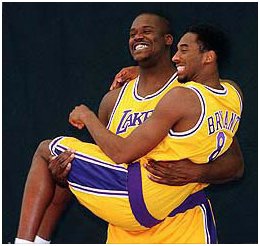
The All-Star game itself was scripted worse than an episode of “The Hills”.  There was the token Shaq-Kobe reunion and excessive coverage of their jovial pregame exchanges, followed by Kobe chucking up 10 shots in the first quarter for an early MVP bid, concluding with Shaq running point, busting crossovers and throwing a few down at the end of a 146-119 West blowout of the East.  The duo took co-MVP honors.  (Wait, you mean LC and Spencer both happened to be at “Les Deux” that night?)

So back to the real world (no pun intended) we go, and an ’09 NBA season that has been pretty nifty.

Eastern Conference Overview: The East is more or less set.  Boston (44-11) and Cleveland (40-11) will jockey for home court throughout the conference playoffs.  Don’t be surprised if an April 12 matchup becomes a de facto elimination game for the number one seed in the conference.  Orlando is locked into the third seed and will serve as an added incentive for the Celtics and Cavs to nail down the top spot.  The Magic (38-13) will not be a friendly second-round opponent for either team.

The fourth through seventh seeds will play out, in some order, with the Hawks (31-21), Heat (28-24), Pistons (27-24) and 76ers (27-24).  Only the fourth and fifth seeds will be able to dodge the power trio in the first round, so look for Detroit and Miami to make strong pushes on Atlanta in the second half.  The final playoff spot is up for grabs, as five teams (Milwaukee, New Jersey, Chicago, New York and Charlotte) are all within three and a half games of one another.

Western Conference Overview: It’s a nine-team race in the West, and considering the struggles the Suns (28-23) have endured (they just fired head coach Terry Porter), it’s possible they’ll be on the outside looking in for the first time since the 2003-04 season.  Still, it’s never wise to bet against Steve Nash and “The Big Cactus”.  Don’t count them out just yet.

The Lakers (42-10) will cruise to the top spot and the road to the Finals will again go through Staples Center.  The Spurs (35-16) have a solid grasp on the second seed, particularly given the run they typically go on after the All-Star break.  The Nuggets (36-17) are in position to be on the top half of the playoff bracket if they can hold off Portland (32-20) and Utah (30-23).  As for how the rest of the west will shake out, only time will tell as the Jazz, Blazers, Rockets, Hornets and Mavericks are all separated by just two and a half games. Expect seven of the eight Western playoff teams to reach the 50-win plateau.

Biggest Surprise: Denver Nuggets The script was fitting:  Chauncey Billups returning to his hometown team, the same team he played briefly for early in his career.  The question was would he be able to adjust to a new set of teammates and a new style of play.  After all, he had spent six full seasons as the floor general of an unchanging core group in a Detroit system predicated on defense.  To make such a fluid transition to Denver’s up and down style of play is a testament to Billups’ hardened veteran mentality.

After letting go of Marcus Camby in the offseason and making the Allen Iverson-for-Billups swap in the first week of the ’08 campaign, the Nuggets seemed due for a step back.  Instead Billups has taken the reigns and forged a fast relationship with Carmelo Anthony on the court.  As a result Denver is tied with San Antonio for the second-best record in the West at the break.  The Nuggets’ defense has been bolstered as well.  For the first time in three years Denver is giving up fewer than 100 points per game.  The Nugs are for real.

Most Significant Addition: Mo Williams/Cavs Lebron James may be a leading candidate for MVP this year, but the acquisition of Mo Williams is the reason why the Cavs are on pace for 64 wins.  And it’s because of Williams that Cleveland is threatening to steal home court from the Celtics in the Eastern Conference playoffs.  For the last few years James has craved and practically begged for a knockdown shooter on the outside.  After nearly single-handedly taking down Boston in the playoffs last year, Lebron was finally rewarded with the first legitimate wingman of his career.

Williams is a proactive point guard with an ability to create, but naturally that isn’t what he’s most needed for on a team with James.  It’s his shooting outbursts that have helped propel the Cavs to a real title contender and serious threat to the Celtics in the East.  At the break he was averaging 17.6 points per game on 47 percent shooting, including 40 percent from beyond the three-point arc.  He erupted for 43 points — a career high — in a Jan. 27 game against Sacramento before besting that with 44 in the last game before the break versus the Suns.

Most Significant Loss: Andrew Bynum/Lakers For the second consecutive year the Lakers lost Bynum to a knee injury just as he appeared to be on the brink of something special.  In the last five full games before he went down Bynum was averaging 26.2 points and 13.8 rebounds per game. Now he’ll have to wait and see if an MCL tear will sideline him for the remainder of the season.

Like last year, the impact of his loss won’t threaten the Lakers in their quest for another top seed in the West.  Nor should it greatly hinder their drive to return to the Finals.  The West has depth, but other than San Antonio (whose number the Lakers have had in recent past) there is no team standing in the path of LA.  It is when they get back to the Finals and meet Cleveland or Boston — two of the best defensive and most physical teams in the league — that they will be ruing the day Bynum went down.  Again.

MVP: Dwyane Wade Look, either Lebron or Kobe is going to win MVP.  They are the two best players in the league on two of the three best teams.  I take issue with the nature of the award, which should be given to the player who is most indispensable to his team.  While their squads wouldn’t be sitting where they are today, both the Cavs and Lakers would still be playoff teams this year without Lebron and Kobe.

There’s no way the same can be said of Miami without Dwyane Wade.  The evidence is already there.  With Wade alternating between being injured and playing hurt last year the Heat won 15 games.  FIFTEEN.  With a healthy Wade this season Miami is 28-24 and occupying the fifth position in the East.  The team’s second-leading scorer is a rookie and the bench is a virtual non-entity (all due respect to Daequan Cook and Chris Quinn).  Wade is averaging 28.3 points, seven assists, five rebounds and two steals per game, meaning he’s accounted for roughly half of Miami’s offensive output.  He takes over close games late more often than anyone else in the game.  Why?  Because he must or Miami will lose.  There is no player more valuable to his team than Wade is to the Heat. The man deserves some votes.

Defining “Dynasty”

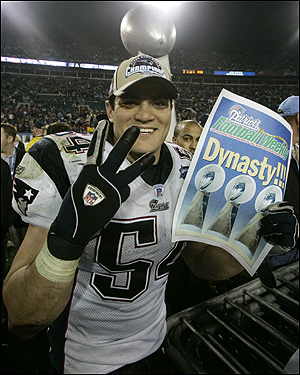
With the Pittsburgh Steelers having just captured their second Super Bowl in four years and sixth overall, it seems like a good time to tackle one of the most subjective and contested concepts in sport, “the dynasty”.

How does one define a sports dynasty? Who has rightly deserved the title of dynasty throughout sports history? What does “dynasty” actually mean?

The last question is the easiest to answer. The origin of the word is from the Greek dunasteia, meaning “lordship”.  According to the Merriam-Webster Dictionary, a dynasty is defined as:

1) a succession of rulers of the same line of descent.

2) a powerful group or family that maintains its position for a considerable time.

Not too much help there, although it’s evident why the notion of a sports dynasty is so debated.  There just isn’t a tangible or relevant definition of the term.  It has been up to the professional leagues, teams, writers and fans to determine what has constituted a dynasty over the years.

When exactly the term entered the vernacular is difficult to pinpoint, but two of the original teams to garner the designation — the Boston Celtics of the late 50s and 60s and the UCLA Bruins of the 60s and early 70s — still come the closest to fulfilling the second definition of the word, “a powerful group or family that maintains its position for a considerable time.”

Red Auerbach’s Celtics won 11 of 13 NBA titles from 1957 to 1969, including eight straight.  John Wooden’s Bruins took down 10 of 12 NCAA championships from 1964 to 1975, highlighted by a run of seven in a row.  Those teams — particularly the Celtics — were dynastic in the truest sense of the word, in that they were sports families headed by powerful patriarchs that held their standing over an extended period of time.

Mergers, expansion and free agency have drastically altered the landscape of professional sports since the old school UCLA and Celtics dynasties.  Understanding that, let’s dissect the dynasties of the (semi) modern era. We’ll use the mid-1970s as a jumping off point, considering the ABA-NBA merger took place in 1976, MLB introduced mainstay franchises such as the Mariners and Blue Jays in 1977, and the Super Bowl era was well under way.

In my opinion, there are two parameters that must be met if a team wants to enter the dynasty debate.

1) the team must win back-to-back to titles.

2) the team must win or have won another title within a few years of the successive championships.

In the three major sports there are a handful of squads that have gone back-to-back over the last 40 years, but that was it.  They didn’t win another one before or after the consecutive titles within a reasonable amount of time.  Among these teams are the New York Yankees (’77 and ’78), Detroit Pistons (’89 and ’90), Toronto Blue Jays (’92 and ’93), Houston Rockets (’94 and ’95), and Denver Broncos (’98 and ’99).

It’s an admirable accomplishment to go back-to-back, but there’s an aspect of sustained excellence inherent to the idea of a sports dynasty that those teams didn’t have.  Two in a row without another can still fall in “flash in the pan” territory.  At least in the context of this argument.

As for the teams that are in the running, let’s um, run through them…

The Pittsburgh Steelers of the 70s — the original “Steel Curtain” — set the the standard for Super Bowl dominance.  Led by Terry Bradshaw, Lynn Swann and “Mean Joe” Greene, Pittsburgh won four out of six titles between 1975 and 1980, a mark that is still yet to be met.  Dynasty.

In the 80s, the San Francisco 49ers gave a solid encore performance to the Steel Curtain.  Behind the innovative and groundbreaking West coast offense instituted by Bill Walsh, Joe Montana and Jerry Rice’s 49ers snagged four Super Bowls in a nine-year span (1982-1990).  Included in that run was a back-to-back in ’89 and ’90, which solidified the Niner dynasty.

No other NFL franchise has won four titles in one era, but the Dallas Cowboys (’92, ’93 and ’95) and New England Patriots (’01, ’03 and ’04) have each gone three out of four.  Given the parity that started to take shape in the mid-90s and the establishment of a salary cap in 1994, it could be argued that the Cowboys and Patriots were actually the two most dominant teams in league history.  We’ll keep that on the back burner for now.

Jumping to MLB — which saw 14 different champions between 1975 and 1995 — the only dynasty of the last 35 years is undisputed: the New York Yankees of the late 90s.  With great pitching and a young superstar named Derek Jeter, the Yankees won four out of five World Series between 1996 and 2000.  That seven different teams have won titles in the eight years since New York’s run only underscores how remarkable it was.

Finally to the NBA, which has been the most conducive to dynasties throughout the time period in question.  Let’s begin with the present, and a peculiar team that has heard the term thrown around in reference to it on more than one occasion.  That would be the San Antonio Spurs.

Since Tim Duncan’s sophomore campaign in 1998, the Spurs have won four of the 10 NBA titles to be contested.  They’ve won three of the last six, but all in odd years (’03, ’05 and ’07).

Duncan will probably go down as the greatest power forward of all time, but his lumbering style and passive attitude are generally cited as the chief reasons why the Spurs have yet to repeat as champs.  The guy has simply never exhibited the fire and drive needed to go after it, year after year.  It takes a cold-blooded leader to repeat, and Duncan — while many things — is not that.  Spurs proponents would argue that a miracle three by Derek Fisher in 2004 and Dirk Nowitzki’s historic three-point play in 2006 are the only things standing between San Antonio and five straight titles.  And they would have a point, except there’s no room for “coulda, woulda, shoulda” when talking dynasty.

I’ll argue that San Antonio’s three titles combined with those plays merit them the moniker of “team of the decade”, but a dynasty?  No.

This is where it gets interesting, because at the beginning of the decade we saw a bona fide dynasty in the Shaq/Kobe Lakers.  Three straight crowns starting with the 1999-00 season.  A loss in the 2004 Finals to the chippy Detroit Pistons — with the additions of Gary Payton and Karl Malone no less — cost the Lakers their shot at being the team of the decade.  That is unless they grab another one in ’09…

Now let’s trek back to the 80s, a magnificent era that featured what I must deem a “co-dynasty”.  Magic’s Lakers and Bird’s Celtics won eight of nine NBA titles beginning with the 1979-80 season.  While LA had the upper hand (winning five rings to Boston’s three and two of the three head-to-head showdowns), there’s no doubt that Magic isn’t Magic without Bird and vice versa.  Same goes for their teams.  The iconic franchises fed off one another, spawned a fervent bicoastal fan base and permanently embedded the sport in American culture.  For that reason the 80s Celtics are the only team to warrant the dynasty tag despite a failure to repeat (they won three of six from ’81 to ’86 and appeared in five Finals during that span).

If we’re talking dynasties and iconic players, the argument begins and ends with one man.  Michael Jordan.  The greatest, most prolific champion of the modern era.  His Bulls three-peated from ’91 to ’93, and again from ’96 to ’98.

He took a break (for reasons still not completely determined) and played baseball for a year and half in between, and his team became mortal without him.  After a truncated return in ’95 and a second straight loss in the Eastern Conference playoffs for the Bulls, MJ made it clear that the glory days were again on the horizon, and he lived up to his word.  When it was over Jordan had essentially gone six-for-six in his prime, a surreal stretch of individual dominance in what was historically believed to be a team game.

The dynasty debate is one of the great ongoing discussions in sport.  While it will continue to live on — in locker rooms, through the media, around the dinner table — the 90s Bulls are the greatest dynasty in recent American sports history.

Any beef?

It’s the Steelers … Here’s Why

Something interesting happened this year. I stopped writing about my team. Because the Patriots’ season (of redemption) was derailed — by Bernard Pollard or Kevin Faulk or karma itself — before it had a chance to get rolling, I simply couldn’t bring myself to reprise my role as a de facto Pats beat writer/columnist. It was that role that sprung me to the early success I had in this business (way back when I was chronicling a dynasty for the Fordham University Theyre coming...publication, The Observer) and made me believe sportswriting was what I wanted to do.

So I tried something different. For the first time in a decade I watched football free of bias, hubris and emotion. I watched and rooted for the Patriots every week, but with nothing personal at stake. Merely as a fan of the game. At a Steelers bar no less.

It’s well documented how much animosity Pittsburgh fans harbor towards the Patriots. New England did twice blow through Heinz Field and thwart Steelers outfits (in 2001 and 2004) from reaching the Super Bowl.

As much as they may despise anyone associated with the Pats, I’ve always liked Pittsburgh. Envy its history and blue collar, hard-nosed style. Respect how its fan base embodies the grit and steel will of the franchise and city. And those Terrible Towels are pretty cool.

Naturally it was difficult — to say the least — to coexist with a crew that had undying hate for my team, that somehow knew and responded appropriately every time something bad happened in a Patriots game — even though the Pats were relegated to five or so TVs in an establishment boasting well over a hundred flat screens.

(For a bit of clarification, this bar is no ordinary sports bar, and I’m talking about the clientele. The average gentleman at “200 Fifth” is about two hundred and a fifth of another hundred pounds. You could field an NFL practice squad with the dudes who frequent this spot. I wouldn’t be surprised if there were a handful of Pro Bowls among these guys. And the funny/scary thing is only the latter statement is hyperbole. But I digress.)

Since Patriots and Steelers games rarely coincided, I tended to get to the bar early, catch the Pats game and gravitate to the HD projection screen in the back that always played the Pittsburgh contests. Aside from a small clique of friendlies who knew and were relatively cool with my affiliations — yet still talked lots of smack — I acted largely as an impostor to the majority of the heads. Gotta look out for numero uno.

So there I was, just another tacit Pittsburgh supporter, plain clothes clad. A veritable Steeler Nation operative, rocking my fist when the good guys scored and shaking my head when they erred.

As much of an outsider as I was, over time I started to realize that the team I was faux following actually bore strong resemblance to the one I used to follow, back in The Observer days.

On a few occasions I have made reference to the fact that the 18-0 (and 18-1) Patriots simply weren’t comparable to the three-time champion Patriots. Were they prolific and dominant? Absolutely. But therein lay the problem. Their offensive supremacy covered up what was an aging defense that had seen its best days pass. More importantly, Brady and the offense rendered the defense a subsidiary part of the team for the majority of the season, and when it came time for the unit to step up, it was as if it suddenly couldn’t handle the pressure and stage it had once lived for.

Way back when, the Patriots defense anchored nine consecutive wins in January and February by exhibiting superior schemes, greater intellect, unrelenting toughness over sixty minutes and a knack for always making the handful of big plays and the one monstrous play necessary to move on and/or win a title. Brady, Brown and Vinatieri handled the rest.

I’ve got news for you, but no team — including the Patriots, who have gone a redoubtable 54-18 since their last title — has resembled those Patriots like this year’s Steelers.

The formula for their success has been eerily similar to New England’s circa 2003-04: ups and downs from an offense committed to the run, a defense that consistently keeps the team in games and forces momentum-changing turnovers in crunch time. A quarterback who always makes the most of a drive when he knows it’s his last. A team that finishes.

I’ve seen it happen too many times this year to be chalked up as coincidental. Against San Diego in Week 11. Versus Dallas in Week 14. In Baltimore the following week. And again in the AFC Championship two Sundays ago.

The defense has guys like Casey Hampton in the trenches, James Harrison and LaMarr Woodley on the outside, and Troy Polamalu in center field; guys that have shown time and again that in physical, taxing affairs they will not blink first. And when they hand the ball to their offense late and a drive must be executed, Ben Roethlisberger will lead it with calmness and precision, looking to Hines Ward when the going gets tough.

Simply put, the Steelers never panic. On occasion they don’t come out of the tunnel with their A-game, but their mental resolve is unwavering and their collective patience is a virtue, the reasons why they’ve come from behind multiple times against quality teams.

It was the “sixty minutes mantra” that typified New England during its run, and it’s the same primary tenet that has carried the Steelers to within sixty minutes of a record-breaking sixth Super Bowl title.

Just as the the Panthers and Eagles were exceptional and worthy opponents of the Patriots, so too are the Cardinals for Pittsburgh. One thing Arizona has benefited from this postseason is playing from ahead. Against Atlanta they were Ben is the first to admit he didnt earn that trophy.  up 14-3 and 28-17. They thrashed Carolina. And in the NFC Championship it was 24-6 before the Eagles knew what hit them.

Kurt Warner-to-Larry Fitzgerald is the explanation for all those crooked scores before halftime. But the enabler was actually Edgerrin James, whose rushing outputs — while a modest 203 yards in three games — had opposing defenses thinking “run” in the back of their minds, which was all the old war horse and stud receiver needed.

The Steelers front seven is the best in football and allowed just 73 yards on the ground to Baltimore, the league’s second-ranked rushing offense. Arizona won’t reach 50 yards, meaning Polamalu will not be needed at the line of scrimmage, meaning under no circumstances will he allow any Cardinals receiver to get behind him for a quick-hit score. Arizona will find the end zone a few times but the Pittsburgh D will make them earn it. Nothing will come easy.

On the other side of the ball, Pittsburgh will use its rushing attack to dictate the pace of the game. Willie Parker is fresher and healthier than any back the revived Cardinals defense has faced this postseason, and is no stranger to running wild in the Super Bowl (who can forget his electrifying 75-yard touchdown sprint in Super Bowl XL?).

The Steelers will win the game because they can run the ball and stop the run. They’ll win the game because Ken Whisenhunt vs. Dick LeBeau is a wash. They’ll win the game because they don’t get down big. They’ll win the game because Roethlisberger has something to prove. They’ll win the game because they’ll see the Terrible Towels.

Above all, the Pittsburgh Steelers will win Super Bowl XLIII because their defense will not lose it.

Steelers 26 Cardinals 21

Last Week: 1-1

Playoffs: 8-2

Celtics Maintaining Pace

Here we are, just past the midway point of the 2008-09 NBA season and the Celtics are on an identical pace with last year’s 66-win championship team. For the second straight campaign, at the 46-game mark the Green have 37 wins to show for.

Time to put to rest all those burning questions about the New Three’s drive and desire to repeat, wouldn’t ya say?

Sure, they have experienced peaks and valleys that are atypical of a team defending a title. The peak was an 18-game winning streak. The valley — a stretch during which they dropped seven of nine, including four straight — had many asserting the Celtics were suddenly not just mortal, but beatable.

Take a more detailed look at the circumstances surrounding both the streak and the lull and it becomes glaringly apparent that this team has few concerns going forward (other than the race with Cleveland for home court, but that’s a story for another day…). Consider the following points.

1) The Celtics tied for the fifth-longest winning streak in NBA history by winning 18 games in a row. Of the six other teams that won at least 18 straight, not a single one did so in the year of a title defense. In fact, other than the Rockets (who won 22 consecutive games last year), every other team on that list enjoyed its historic winning streak during a championship season. It’s one thing to be that dominant over an extended stretch that ultimately ends with a ring; it’s a whole other thing to do it the year after winning a ring, considering every opposing team has your name circled in red on its schedule.

2) The bad run began on Christmas Day in Los Angeles, which marked the first time the Celtics and Lakers squared off since Boston routed LA in six games in last June’s NBA Finals. The game was unequivocally a must-win for the Lakers — particularly given that they were (interestingly?) awarded home court. Another loss to the Celtics in front of a national audience would have been catastrophic for LA.

3) Naturally, playing the Lakers on Christmas was important to the Celtics as well, and after letting the game slip away in the final 90 seconds it was clear they left Tinseltown lacking their usual heightened focus. That their next three games were all on the west coast didn’t help things. A holiday swing out west is always tough. A 1-3 trip after an 18-game unbeaten streak should be chalked up as rigors of the business, not general cause for alarm.

4) When all was said and done, the Celtics were forced to play nine games in 16 days through the heart of the holiday season, bookending the Lakers game with a January 9 showdown in Cleveland, which they lost handily. Of those nine games, all but two were on the road, culminating with three games in four days at the end. Exhaustion can even set in on a warrior like Kevin Garnett.

5) Look at how they’ve responded over the two weeks since the Cavs game: Eight wins in a row with an average margin of victory over 16 points; home-and-home sweeps of Toronto and New Jersey; road victories in Miami and Orlando; a pair of beatings in Boston of the Suns and Mavericks. The recurring theme throughout those contests has been a return of the defensive intensity that defined the team in its trek to a 17th title and beyond.

Between an arduous slate of games over the holidays and a general lack of any legitimate down time thus far — the Celtics have played four more games than Cleveland, and three more than the Lakers and Magic — the champs have not been afforded any breaks from the schedule makers, which makes their current body of work all the more remarkable.

Despite not having someone locked into the role of sixth man like James Posey was last year, Doc Rivers has again managed to stay true to his promise of keeping the stars fresh for the playoffs, as Garnett (32.5 minutes per game), Paul Pierce (36.5) and Ray Allen (36.3) are all right around their average minutes from last year.

Eddie House, Leon Powe and Glen Davis have become interchangeable parts off the bench (depending on matchups), and the rotation has worked well. Additional reinforcements could also be on the way. If the Knicks can negotiate a buyout with Stephon Marbury, there’s a good chance the former All-Star will end up in green. Marbury or not, it’s widely anticipated that Danny Ainge will bring in a veteran to provide more depth and experience for the playoffs.

Bottom line is halfway through the season the Celtics are still the team to beat and will remain so for the duration. They are a cool 35-2 in games on either side of the slump and are as healthy, hungry and happy as ever.

What more can you ask for?

What Happened to Carolina? (and Championship Sunday Preview)

Before we jump into championship Sunday let’s set the record straight: Vegas definitely knew something the rest of us didn’t last weekend. About Arizona. And yes, about Carolina.

On a weekend when there were three road underdogs with realistic chances to win outright (that would have been Baltimore, Philadelphia and San Diego…), oddsmakers had Carolina favored by margins unseen since the Patriots-Giants Super Bowl. The Panthers were 10-point favorites, and even more striking, had moneylines ranging up to minus-500 (meaning a bettor had to lay $500 to win $100).

In the encyclopedia of sports wagering those kinds of lines are entrenched in “sure thing” territory.

So what happened? Bettors either parlayed or teased their choice road team (likely the Ravens or Eagles) with Carolina. By halftime in Charlotte they were all royally screwed. And Vegas snickered. Gotcha.

In hindsight, the crux of the matter is that on a weekend rife with varying parlay and teaser potential, Vegas made it impossible for bettors to stay away from the Panthers. Their silent pitch being Go ahead, throw Carolina into that Baltimore/Pittsburgh parlay, it’s just going to pad your winnings if you get through the Ravens-Titans game … or … If you like Philly and Pittsburgh to win outright just tease those Carolina points down and now you have a robust three-teamer, whaddya have to lose?

Everything.

Between Tennessee’s well-documented lack of discipline on the field and the Giants’ glaring inability to generate offense through the air post-Plax, Vegas was aware that Baltimore and Philly — both six-seeds — were more than capable of bumping the odds-on favorites. So they slyly made Carolina the runaway favorite of the weekend (Pittsburgh had the closest comparable moneyline, at minus-260), and the bettors lapped up the Kool-Aid.

The most obvious question now is how could they have known the Cardinals were going to pull one of the great shockers in playoff history? Here are a few theories, some combination of which undoubtedly fueled the deception.

1. We didn’t look closely enough at the first Arizona-Carolina meeting. Much like the playoff game, Arizona dominated Carolina for two-plus quarters in the earlier meeting. Down 17-3, the Panthers got back in the game midway through the third quarter with a six-play, 80-yard drive that included four runs. The game was tightly contested the rest of the way. The Panthers tied it at 17; the Cardinals retook the lead but ultimately fell 27-23. Kurt Warner (35-49, 381 yards, two touchdowns) had his way with the Carolina secondary while the maligned Arizona run defense held the Panthers to 113 yards on the ground, 40 below their season average. Chris Collinsworth — on “Inside the NFL” — was the only talking head to point this stuff out in the week leading up to the playoff game. Nobody listened.

2. We didn’t take into account the fact that Arizona found itself in a familiar position: with nothing to play for in December. The difference being the Cardinals are historically FINISHED by the beginning of December. How odd it must have been to take the field on meaningless Sundays down the stretch with nothing to play for until, umm the franchise’s FIRST HOME PLAYOFF GAME SINCE 1947! With that said, can you really blame them for a 2-2 finish that included a 40-point blowout loss in blizzardy New England? After that game did Kurt Warner give a tear-jerking speech about how nothing matters until the playoffs? Could the simple explanation be that a talented team in a talentless division simply couldn’t summon the necessary motivation with such a momentous game on the horizon? These questions will haunt me always.

3. We didn’t realize that Carolina’s finish was not as impressive at it seemed. The Panthers went 3-1 in December, starting with the “bandwagon” Monday night game against Tampa Bay. You know, the game they ran all over a 9-3 Bucs team on a national stage, and everyone (including yours truly) hopped on the bandwagon, unaware that Tampa was terrible. That was followed by a 30-10 spanking of a Denver team we found out was in the midst of the worst collapse in league history. After that was the flexed Sunday night showdown with the Giants, a contest in which the Panthers blew an 11-point lead and lost in overtime. In their season finale against the Saints they watched a 23-3 lead evaporate and had to scramble in the final minute to pull out a 33-31 victory that preserved the NFC’s second seed. That’s what you call writing on the wall.

4. The Carolina players sipped the same Kool-Aid Vegas was pushing on the gamblers. We’re 8-0 at home, we’re rested. We’ve always gone to at least the NFC Championship Game every other time we’ve been in the playoffs. We should have beaten the Giants a few weeks ago and are a week away from settling that score. THIS IS OUR YEAR. Hook, line and sinker.

So props to Vegas for pulling the curtain over our eyes, for teaching us another harsh lesson only the NFL playoffs can substantiate. It’s time to file that one away and move on.

Here are the championship picks.

NFC Championship: Philadelphia Eagles (11-6-1) at Arizona Cardinals (11-7)

Since we’ve already dissected and possibly gotten to the root of Arizona’s unlikely rise to the cusp of a Super Bowl berth, this pick is easy, right? I’m afraid not. It’s evident that — other than Collinsworth — nobody sufficiently broke down the tape of the first Arizona-Carolina game, which as we are now aware contained valuable clues that could have foreshadowed things to come.

We would be remiss to do the same with the Eagles, particularly given the 48-20 hurting they put on Arizona in November. The naysayers would indicate that was a wholly different Cardinals team, and they may be right. Just consider that 1) Arizona was a week removed from a valiant effort against the then 10-1 Giants, 2) the Eagles were in total disarray and were accordingly booked as underdogs at home, and 3) the game was played on Thanksgiving night. In other words, both teams entered that game with something to prove.

An argument could be made that the Cardinals were actually peaking going into that contest (they were 5-2 over their last seven, losing only to Carolina and the Giants). The Eagles sprung out to 21-0 lead and never looked back. Donovan McNabb threw for 260 yards and four touchdowns and Brian Westbrook scored four times (twice on the ground).

Westbrook’s health was in question throughout the beginning part of the week leading up to Sunday’s title game, but he practiced Friday and is apparently ready to go. The rematch surely won’t be another blowout, but what happened in the first game can’t be discounted.

Each week there has been a trendy pick that ends up backfiring. It was Atlanta in the wild-card round and San Diego in the divisional round. This month the Cardinals have proven beyond a reasonable doubt that not only did they belong in the playoffs, but they were actually a lot better than their record indicated (as opposed to a lot worse…). The coming together of their defense has been the primary reason they’ve won a pair of games this postseason.

The difference this week is the Cardinals D is about to meet its match in the Eagles, who have been playing Super Bowl worthy defense since December. In a game that figures to feature a decent amount of scoring, the NFC title will come down to the unit that can make a big play to stall the opposing offense’s momentum. The nod goes to Philly in that respect, and with it will come a second NFC championship five years.

Eagles 29 Cardinals 23

AFC Championship: Baltimore Ravens (13-5) at Pittsburgh Steelers (13-4)

A common misconception is that when divisional rivals square off for a third time in the playoffs, and one squad has taken the first two, it’s nearly impossible for the favored team to complete the trifecta. While that rationale was validated with the Giants-Cowboys divisional playoff last year, in fact only seven of 18 teams that dropped both regular season games to an opponent came back to win the third in the postseason.

If Baltimore wants to become the eighth, it will need a greater offensive showing than it submitted last week against Tennessee. Led by Joe Flacco, the Ravens offense was bottled up by the Titans defense, gaining only 211 total yards. Baltimore won the game in the same fashion that every team with no business winning a playoff game prevails: by taking care of the ball, committing fewer penalties and forcing huge turnovers.

The Ravens defense, traditionally stout, did a lot of bending against Kerry Collins, giving up 391 total yards. It made up for it by inducing three Tennessee turnovers in the red zone. The Baltimore D knows that if it allows the Steelers to move the ball like it did the Titans, Pittsburgh will turn those possessions into points.

As for the Baltimore offense, it’s all well and good they have only turned the ball over once in the playoffs. Yet it’s no secret that they struggled to move the football against Miami and Tennessee, the NFL’s 15th and seventh-ranked units. Pittsburgh’s defense is on the next level, tops in the league in total defense, pass defense and points allowed.

When the teams last played in December the Ravens could only muster 202 yards of total offense, and failed to reach the end zone. I expect a similar game this time around. The Steelers will be able to run the ball some, opening up their play action down the field. The Ravens offensive game plan will be similar: stay true to the run in the hopes of catching the Steelers in the wrong blitz package so Flacco has a chance of connecting with Derrick Mason on a deep ball.

Both offenses are known to use trickery, but in three combined games these playoffs we have yet to see a flee-flicker or reverse pass. With the top two defenses in the league set to do battle — and both in love with the blitz — expect some schoolyard plays and a handful of field goals. Just don’t expect the Ravens to replicate their performance from last week. Steelers move onto to XLIII.

Steelers 16 Ravens 12

Last Week: 3-1

Playoffs: 7-1

NFL Divisional Preview

A few leftover thoughts from wild-card weekend…

It seems many were underwhelmed with Philadelphia’s win in Minnesota, citing Donovan McNabb’s turnovers and Andy Reid’s play calling. Fact is the Eagles registered a 12-point win on the road in the playoffs and McNabb consistently moved the ball even though the Vikings run defense stifled Brian Westbrook all day. If the Eagles defense — which was championship-caliber in the second half — could have gotten off the field on third downs early in the game the final score would’ve been even more lopsided.

Can the Falcons’ final scoring drive against Arizona officially be renamed Matty Ice’s Drive For The Over? I fear a few folks in Vegas have already beaten me to the punch on that one.

With their 23-17 overtime win over the Colts, the Chargers joined the Patriots as the only team to down Peyton Manning twice in the playoffs. It’s no secret that San Diego has taken a page from New England’s 2003-04 defensive schematic. By masking coverages and blitz packages through constant movement and interchanging parts at the line of scrimmage, the Chargers have been able to flummox Manning to the degree that he loses his rhythm and starts making mistakes. That’s why they’ve had success against Indy.

Speaking of the Chargers, Mike Scifres quite literally kicked them into the second round. Hands down the most remarkable punting performance this decade.

One more San Diego note: It’s unfortunate that LaDainian Tomlinson has been hurt the last two postseasons, but each shot of him in pads on the sidelines, scowling while his team guts out playoff games, further damages his legacy. The fact that the Chargers have won three of their last four in January (only losing to the 17-0 Patriots) only makes it worse. I’ve always liked LT and it’s tough watching his career take this kind of turn.

The Ravens defense is frightening. And this freakin’ man is downright terrifying.

Finally, how the hell did Matt Millen ever get hired to join NBC’s in-studio team last Saturday? Was there a sign hanging outside the Rainbow Room that read: “Seeking: Football Analyst. GM of any Worst Team Ever preferred.”? Did Dick Ebersol lose a bet to Bob Costas? Is the federal unemployment office situated at 32 Rock? I demand an explanation for this. On a related note, Millen REALLY liked the Falcons.

Onto divisional weekend we go.

(4) San Diego Chargers at (2) Pittsburgh Steelers

What a difference a win in January can make. This time last week the Chargers were a fraud, in the playoffs because of Denver’s collapse, not their own strong finish. How perceptions can change after beating a Peyton Manning-led team that hadn’t lost since October. Suddenly the Chargers are a chic pick to pull the upset this weekend against the Steelers. They played Pittsburgh tooth and nail at Heinz Field just seven weeks ago, losing a baseball slugfest, 11-10. It was cold and snowy that day and the warm weather Bolts were game.

The circumstances are different this time around. If the Chargers are to have any hope of opening up their passing game it’s imperative that they get something from their ground attack. Even in a perfect world that’s already the tallest of orders against Pittsburgh’s second-ranked run defense.

San Diego’s running back situation is far from perfect. It doesn’t look like LaDainian Tomlinson will be able to contribute much, if anything at all. He’s calling his groin injury the worst of his career. Darren Sproles compiled a mind-blowing 328 all-purpose yards last week on 34 touches (22 carries, five receptions, four kickoff returns, three punt returns) after averaging about 10 touches a game throughout the season. His 5-foot-6 frame cannot withstand another heavy workload, particularly against one of the hardest hitting defenses in the league. Michael Bennett, who took his first four carries as a Charger last week, becomes a factor back, which is not good news for San Diego.

Stopping the run will also be an issue for the Chargers. They smothered Indy’s rushing attack last weekend, but that was no great feat considering the Colts ranked second-to-last in the NFL at 79.6 yards per game during the regular season. Willie Parker and Mewelde Moore will be on fresh legs and should pose problems for San Diego’s defense. The Steelers will take control of the line of scrimmage early on and grind out the victory against an exhausted Chargers team that has already been playing playoff football for a month.

Steelers 19 Chargers 13

(6) Baltimore Ravens at (1) Tennessee Titans

The last time these teams met in the playoffs was January, 2004. In that game two old divisional rivals waged one of the most physical, skull crunching wars you’d ever want to see. The Titans won 20-17. Fast forward to Week 5 this year, when Tennessee came from behind late and beat the Ravens 13-10 in another intense and grueling affair. This bout will pit the league’s number two defense (Baltimore) against Tennessee’s seventh-ranked unit.

The Ravens and Titans are mirror images of one another. Both rely on run-heavy offenses (Baltimore was fourth in the NFL at 148.5 yards a game on the ground while Tennessee checked in at seventh, averaging 137.4 yards), quarterbacks that manage the game and minimize mistakes (Kerry Collins threw only seven interceptions all year; Joe Flacco tossed 12), and defenses that live for winning time.

These squads are even on paper but the edge must go to Baltimore in this one. Tennessee’s defense is elite but has major question marks. Among them: 1) How will Albert Haynesworth and Kyle Vanden Bosch respond after being sidelined since December 7 with hamstring and groin injuries? 2) Will the Titan defenders — specifically Cortland Finnegan — be able to harness the emotion of a high octane game and avoid costly penalties? 3) Can Kerry Collins avoid a repeat of his performance from Week 5, when he was intercepted twice by a pressuring and ball-hawking Ravens D?

There are simply no concerns for the Ravens defense, which is fresh off undressing a Dolphins offense that had tied an NFL record for fewest turnovers (13) in a 16-game season. Baltimore’s fast, ferocious and playmaking defense forced the Fins into five giveaways. Ed Reed, who picked Chad Pennington twice, has reinvented the strong safety position over the last seven games, totaling 10 interceptions and two touchdowns.

The Ravens don’t give up more than three long drives in any game and they make it nearly impossible to get into the end zone from short yardage. Flacco exhibited he can take care of the ball in a hostile environment in January. Tennessee is clearly the team with the most to prove, given its 3-3 finish after a 10-0 start. Baltimore will jump out to a slim lead by the second quarter and protect it for the remainder of the game. Collins will make a costly mistake that ices it and sends Baltimore back to the AFC Championship Game for the first time since its Super Bowl season of 2000.

Ravens 16 Titans 13

(4) Arizona Cardinals at (2) Carolina Panthers

Like every other divisional game this weekend, Cardinals-Panthers is a rematch from earlier in the year. Carolina took the first one, 27-23, in a contest that unofficially marked the coming out party for DeAngelo Williams. He rushed for 108 yards and a touchdown on 17 carries, the first of four consecutive 100-yard performances that rocketed him into the discussion of best back in the NFL. Arizona’s run defense was middle of the pack this year and will no doubt have difficulty containing Williams and his backfield mate, Jonathan Stewart. The two combined for 28 touchdowns in the regular season.

The Panthers defense is a pressuring unit, led by Julius Peppers (14.5 sacks). Kurt Warner is not adept at dealing with strong pass rushes, and if Arizona is going to keep pace with Carolina it must be through the air. Anquan Boldin has an injured hamstring, which he aggravated on his touchdown catch against Atlanta in the wild-card game. Warner needs his full arsenal as well as consistent pass protection. Otherwise he risks turning the ball over in bunches.

The fact that Carolina was the league’s only undefeated team at home this year makes this game fairly easy to call. Other than the Bears (who lost 20-17 in Carolina in Week 2), the Cardinals are the closest any team has come to beating the Panthers in Charlotte. Don’t put too much stock in that regular season game. Carolina is 8-0 at home and 3-0 in divisional games overall. Those records will remain unblemished come Saturday night.

Panthers 28 Cardinals 17

(6) Philadelphia Eagles at (1) New York Giants

Forget rematches. Every time these teams meet it’s a rematch. It’s also usually a grudge match, and sometimes, like Sunday’s divisional showdown, a rubber match. The teams split two meetings this year, with each winning on the other’s home field. This will be the second time in three years that they clash in a rubber match for the right to move on (the Eagles beat the Giants in a 2006 wild-card game, 23-20).
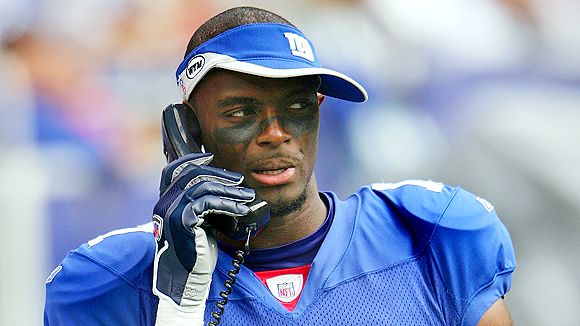
The Eagles are drawing comparisons to the Giants of a year ago, and the similarities are there. Like last year’s Giants, the Eagles were written off amid mediocrity and turmoil only to receive new life in Week 17 and parlay it into a road win in the the wild-card round. And like the Giants were forced to do in Dallas, Philly will travel into the house of the NFC’s top seed in a game it’s being given little chance to win. The G-Men historically proved that going on the road with house money is a dangerous proposition for an opponent that may have more talent but also more expectation. It’s even more dangerous when it’s a divisional matchup and the teams know each other so well that the game can very well hinge on state of mind.

Regardless of what you read, the champs aren’t anywhere close to at peace with their present situation. They killed teams en route an 11-1 start. Then their hammer, Brandon Jacobs, became hobbled and their big play weapon, Plaxico Burress, shot himself and was dismissed from the team. Yet they are still expected and favored to repeat as Super Bowl champions.

On the other hand you have the Eagles, who came within a single stitch of having not just their season, but an entire decade torn apart at the seams. After turning the ball over four times against the Ravens and getting benched, Donovan McNabb was ready to sever his longstanding contentious relationship with the city of Philadelphia, and they in turn were preparing for the final breakup. It still hasn’t come. Now, in a notoriously pessimistic city that is nursing a World Series title, the skies are sunny and only good can come from what was a lost football season.

Success in January requires a union of good karma and favorable matchups. The Eagles have the karma and they also have the matchups. Brian Westbrook is a notorious Giant-killer. Since 2006, the teams have played seven times and New York has won four. In the six games Westbrook participated in he averaged 164 total yards and found the end zone seven times. It comes down to ball security for Philly’s versatile back. When Westbrook didn’t turn the ball over the Eagles were 3-1 and when he lost a fumble they were 0-2. Every time he touches the ball it’s a possible mismatch for the Giants defense.

The last time the Eagles played the Giants in Week 14 Westbrook ran wild, totaling 203 total yards and two touchdowns. The final score read 20-14 but the game wasn’t that close. A blocked field goal at the end of the half that should have given the Eagles a 13-0 lead turned into a touchdown return for the Giants and a 10-point swing. Philly held New York to 88 yards on the ground and frustrated Eli Manning, who was just 13-for-27 with 123 yards.
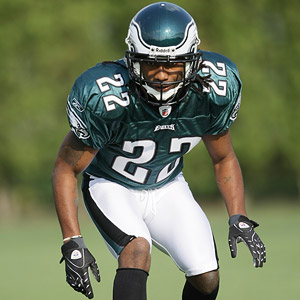
It’s no coincidence that Burress was absent from that game. One of Manning’s greatest strengths has always been his ability to convert long third downs in the face of a fierce pass rush. He’s excellent at taking quick and calm three or four step drops with the heat coming and unloading the ball. Naturally it helped to have one of the tallest and most physical receivers in the game hauling in passes on the other end in single coverage. Since Eli no longer has that threat at his disposal it’s incumbent on the Giants to establish their running game. The Eagles front seven proved in December against New York and again last week in Minnesota that they are up to the task of stopping the run.

With no Plax to worry about, Jim Johnson won’t hesitate to bring lots of pressure from many different looks and angles. This game will come down to Manning vs. the Eagles secondary. Time and again throughout his career Eli has made a habit of tossing up a duck when he feels the heat. He did just that in the Super Bowl against the Patriots, except somehow the ball, along with history, slipped through the hands of Asante Samuel. It’s fair to say Samuel has some unfinished business with Manning. That vendetta will contribute to Philly taking down the champs.

Eagles 20 Giants 17

Wild-Card Picks: 4-0

NFL Wild-Card Preview and Playoff Picks

As we draw closer to the start of the 2008 NFL playoffs, two facts are evident: 1) there is no clear Super Bowl favorite, 2) four road favorites in the wild-card round is unprecedented.

In other words, buckle up. The wackiest and most unpredictable regular season this decade is about to enter do-or-die mode, and nobody knows how it’s all gonna go down.

Everything is so up in the air that even the big boys out west are tentative. Considering every road team is between a one and three point favorite, Vegas sportsbooks — as opposed to last year with the Patriots — have backed off and are allowing the bettors to determine the prevailing sentiment when it comes to picking outright winners. Common logic indicates that home teams have a marked advantage in an elimination format, yet reality says the four best teams taking the field this weekend are doing so on the road.

The bettors have generally agreed. With the exception of the Colts, each road team has gained steam throughout the week (Philly opened at a one-point underdog and is currently a three-point favorite; Baltimore rose from 2.5 to 3.5 point favorites; Atlanta from 1.5 to 2), meaning money has been laid heavier on the road teams. Vegas, in its effort to balance the betting, has responded by swelling the lines even more in favor of the away teams.

That — as any oddsmaker will allow — is problematic, because home field still absolutely means something in the playoffs. You can be assured that at least one of the home ‘dogs advances to divisional weekend. So which squad will protect its turf?

(6) Philadelphia Eagles at (3) Minnesota Vikings

Tavaris Jackson can’t handle the blitz and Jim Johnson is one of the best blitzing defensive coordinators in the league. That’s what you call a game-changing mismatch. As well as Jackson has performed since regaining his job (8 touchdowns, one interception), he’ll have to be even better if the Vikings are to stand a chance. And that’s assuming Minnesota can establish Adrian Peterson early and take some heat off its quarterback. The numbers say Minnesota’s fifth-ranked rushing offense and Philadelphia’s fourth-ranked rushing defense will offset one another. If that’s the case this game could get ugly.

Of course AP is capable of breaking off a huge run on any given carry. However, if the Eagles front seven come out and stuff him early that will open the floodgates for Johnson to bring the noise. Peterson should be able to get some decent yardage, which will keep the Eagles defense (relatively) at bay. The x-factor is Brian Westbrook. If he can run on Minnesota’s stout trench defense, Philly will roll.

The Vikings will come out inspired by a boisterous Metrodome crowd enjoying its first playoff game since 2000, but a healthy dose of Westbrook and too much pressure from Johnson’s defense will end Minnesota’s season at home.

Eagles 27 Vikings 16

(5) Atlanta Falcons at (4) Arizona Cardinals

No one is impressed with the way the Cardinals played down the stretch, highlighted by no-shows at home against Minnesota and in New England. Conversely, the Falcons — behind Matt Ryan and Michael Turner — continued to open eyes right through Week 17. Going into Minnesota on Dec. 21 and knocking off the playoff-hungry Vikings was a quality showing and helped Atlanta shed the moniker of “suspect road team”. However, it must be pointed out that Ryan was just 13-for-24 with 134 yards and a touchdown in that game. Turner finished with a decent day’s work: 19 carries, 70 yards, one touchdown. It was really the Vikings who beat themselves, losing four fumbles.

The Cardinals run defense is vastly inferior to the Vikings, but they do have playmakers in the secondary (notably safety Adrian Wilson). Let’s not kid ourselves. This game will be an air-it-out affair. Led by Kurt Warner, Arizona boasts the best passing attack of any playoff team. All three starting wideouts for the Cardinals caught at least 77 balls and logged over 1,000 yards receiving. Atlanta’s Roddy White and Michael Jenkins are a comparable duo and will give Arizona’s secondary problems with their size and aggressiveness. But will Ryan be able to get the ball to them with the same consistency as Warner will to his trio of Larry Fitzgerald, Anquan Boldin and Steve Breaston?

Ryan, who won three of four games in December, averaged just 200 yards passing and tossed only three touchdowns in that span. He’ll need to combine with Turner for 400-plus yards and four touchdowns if the Falcons are going to keep up with Warner, who thrives when he has time to sit back in the pocket and pick apart defenses. Arizona was 6-2 at home and weather is not an issue. Cards move on.

Cardinals 31 Falcons 27

(6) Baltimore Ravens at (3) Miami Dolphins

Of all the wild-card matchups, this is the one where home field matters the least. Baltimore’s defense relishes going on the road and silencing opposing crowds. They’ve already done it to the Dolphins once this season, taking the first big bite out of the Wildcat en route to a 27-13 Week 7 victory in Miami.

Until the Fins brought back the old single wing and delved deep into the trick-playbook this year, it was traditionally held that NFL teams relying on misdirection plays and flee-flickers as principle means of generating offense would ultimately fail. Sure enough, after gathering enough tape of the formation and the roots of its successes, defenses started to adjust and minimize the damage. Unfortunately for Miami, it was most likely the tape of the Baltimore game that furnished opposing coordinators with a blueprint for stopping the Wildcat. The simple fact is Miami’s offense isn’t good enough to succeed without the Wildcat.

Another adage that always holds true in the playoffs: running the ball and stopping the run leads to wins. Wildcat formations aside, Baltimore’s running game (fourth the league) and rushing defense (third in the league) will enable the Ravens to control both sides of the line of scrimmage. In order to beat the Ravens you must throw deep on them, and Chad Pennington lacks the arm and the true home run threat to do so. Baltimore stuffs the Dolphins and advances.

Ravens 20 Dolphins 10

(5) Indianapolis Colts at (4) San Diego Chargers

12 wins was supposed to get the Colts a first round bye. 8 wins was supposed to get the Chargers a date on their couches for the playoffs. Yet here we are, on the brink of an unlikely wild-card meeting between two teams that have developed quite the rivalry over the last couple years. NFL insiders often note how the postseason doesn’t really begin until divisional weekend. Don’t let the disparity in records deceive you; this will be the game of the weekend, a contest that will become the bar-setter for every game to come.

The case for the Colts is cut and dry. Winners of nine straight, they are the league’s hottest team entering the postseason. Peyton Manning just collected his third piece of MVP hardware, and this may have been his best job yet considering the pieces around him. Tony Dungy is an exceptional coach with a ring. Done and done, right? Not so fast. The Chargers are peaking at the right time for the second year in a row. Their offense has averaged over 37 points per game during a four-game winning streak to close the season. The defense allowed just 18.5 points per game since Ron Rivera was inserted in place of Ted Cottrell. And bear in mind that if Jake Delhomme doesn’t complete a miraculous touchdown pass with no time on the clock in Week 1 and Ed Hochuli doesn’t blow the call vs. Denver in Week 2, the Chargers are a much more appealing 10-6.

Because both offenses are operating at such high levels and both defenses remain mediocre at best, clock management and red zone offense will be focal points in this game. Three and outs will be scarce. Sustained drives will be common. The longer Manning can keep the ball away from Phillip Rivers the better, and vice versa. That means establishing Joseph Addai and LaDainian Tomlinson will be key. The early edge goes to LT, who looked positively reinvigorated last week against Denver, finding the end zone three times and once again showing off his singular cutback ability. A groin strain isn’t expected to keep him out.

When the teams met in Week 12, Rivers led a game-tying drive late. Norv Turner made the grave mistake of calling a timeout on third down, which contributed to Manning getting the ball back with 90 seconds remaining. He navigated the Colts into field goal range and Adam Vinatieri booted a 51-yarder to win the game. The rematch is so tough to call because the game will be tight in the fourth quarter. This side of Tom Brady, Manning is the best in the business at leading game-winning drives. But San Diego ranks first in the league with a 47.5 percent scoring rate on drives after the opposition has scored. Basically the quarterback who has the ball in his hands last will win the game.

Given how the season began and ended for the Chargers, it seems like the football gods are with them. Rivers will lead San Diego from behind on the final drive and end Manning’s season for the second straight year.

Chargers 26 Colts 24

Rest of Playoff Picks

Divisional Round

(2) Pittsburgh over (4) San Diego

(6) Baltimore over (1) Tennessee

(6) Philadelphia over (1) NY Giants

(2) Carolina over (4) Arizona

AFC Championship

(2) Pittsburgh over (6) Baltimore

NFC Championship

(2) Carolina over (6) Philadelphia

Super Bowl XLIII

Pittsburgh over Carolina