Skip to content

Posts from the ‘Archives’ Category

2012 NFL Divisional Preview

Before jumping into previews of this weekend’s divisional games, some brief postmortems on a pair of the one-and-dones from wild-card weekend …

Marvin Lewis better think long and hard before throwing a challenge flag next time he leads a team to the playoffs. The Bengals’ head coach blew both of his challenges in the first half of Saturday’s 31-10 loss to the Texans, the second straight playoff game he has been without any red flags after the intermission.

The point here is not to dissect the challenges. What’s notable is each could have been avoided if Lewis had called a timeout instead of reaching for the red flag. Timeouts carry very little significance in the first half, and they buy a coach and the guys upstairs time to look at a play before coming to a conclusion. In the case of each challenge Saturday, a few looks would have made it clear that the odds were not good for a reversal. Losing a timeout (which happens on a failed challenge anyway) is not a big deal in the first half. Losing a challenge is critical. Losing both is an early deathblow, something Lewis has managed to do in consecutive postseason games …

Not only were the Steelers banged up beyond belief, but defensive coordinator Dick LeBeau’s defensive game plan resulted in a monumental backfire in Sunday’s 29-23 overtime loss to Denver. By stacking the box and playing a ton of Cover Zero, LeBeau anticipated the run-heavy offense of Tim Tebow and the Broncos would be stuffed at the source and Denver would be unable to move the ball.
ray-lewisLeBeau underestimated how the loss of starting safety Ryan Clark would impact the Pittsburgh secondary. In a game that he was leaning uncharacteristically heavily on his safeties, putting backup Ryan Mundy on a island was not a good idea. It didn’t help that Ike Taylor played one of the worst games of his life at the most inopportune time, but LeBeau seemed like he never entertained the notion that the Denver game plan might be to try and make plays over the top of his defense …

Houston Texans (11-6) at Baltimore Ravens (12-4)

These teams met in Week 6 at M&T Bank Stadium, with the Ravens pulling away in the fourth quarter of an eventual 29-14 win. Joe Flacco and the Baltimore offense moved the ball with surprising ease against the top-rated Houston defense, piling up 402 total yards. However, following an opening 97-yard touchdown march, Baltimore had to settle for field goals on five of its final six scoring drives, which kept the game close.

Houston had two things going for it that day. For one, Matt Schaub was still under center. The Texans quarterback submitted a modest performance, completing 21 of 37 passes for 220 yards and a touchdown. The key was he took care of the football, something opposing quarterbacks traditionally have lots of difficulty doing in Baltimore. Houston actually won the turnover battle, 2-0.

That won’t be happening again with T.J. Yates going into one of the more hostile environments for his first road playoff game. Yates was decent against the Bengals (11-for-20, 159 yards, touchdown), but nearly all of his completions came off play-action and he also made one terrible throw that Bengals safety Chris Crocker would have likely taken the other way for a game-tying touchdown in the third quarter had he not dropped an easy interception.

The Ravens grind inexperienced quarterbacks into the ground in the playoffs. In blowout wins over the Matt Cassel-led Chiefs in 2010 and Chad Pennington’s Dolphins in 2008, the Baltimore D forced a combined 10 turnovers (seven of which were interceptions). The Ravens did something similar to Tom Brady (four turnovers) and a house-of-cards Patriots team in 2009.

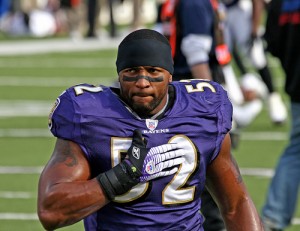
Those games were all on the road. Having obtained home-field advantage for the first time in the Flacco era and fresh off seeing the team that has thwarted their Super Bowl aspirations twice in the last three postseasons get bounced in a Mile High shocker, Ray Lewis and Terrell Suggs are circling the wagons. The Ravens smell blood in the water.

Ravens 27
Texans 10

Denver Broncos (9-8) at New England Patriots (13-3)

Two recent patterns, working in tandem, have emerged over the past few postseasons. A heavy underdog first pulls off a huge upset in the wild-card round. Then that unlikely victor, headed on the road to a rested top seed, proceeds to gain steam throughout the following week as the talking heads find a way to make a case for another odds-defying triumph.

Except that’s not what happens.

Exhibit A: 2008, the 8-8 (and formerly 4-8) Chargers knocked off the 12-4 Colts in Round 1 at home. San Diego then went into Pittsburgh as seven-point ‘dogs and found itself down 28-10 in the fourth quarter en route to a 35-24 defeat.

Exhibit B: 2009, the 10-6 Cardinals won a wild 51-45 overtime shootout with an 11-5 Green Bay team many had pegged for a Super Bowl run. Just when everyone started wondering if a second straight Super Bowl might have been in the “Cards,” the Saints blew the doors off Arizona in the divisional round, 45-14.

Exhibit C: Last year, in the grandaddy of them all, the 7-9 Seahawks shocked the world by bumping the defending champion Saints, 41-36. Like clockwork, the momentum built up throughout the week as Seattle – a 9.5 point underdog – made its way to Soldier Field for a date with the Bears. Chicago led, 35-10, with three minutes to go before the Seahawks scored a pair of garbage touchdowns in a 35-24 loss.

That brings us to Saturday night, when Tim Tebow and the miracle-working Broncos will attempt to become the latest team to spoil a Patriots season at Gillette Stadium.

Denver’s impressive victory Sunday notwithstanding, one would be remiss not to note that it came against a Pittsburgh team that was without starting center Maurkice Pouncey, safety Clark, defensive end Aaron Smith and running back Rashard Mendenhall. The Steelers’ problems were compounded by an immobile Ben Roethlisberger, the early losses of the rest of their defensive line (nose tackle Casey Hampton and defensive end Brett Keisel), the above-stated ill-conceived defensive game plan and the unenviable task of playing from behind in the thin air.

Tebow made some big plays, for sure, but everything broke right for the Broncos.

Against a New England team that has the benefit of extra preparation time, tape from the teams’ Dec. 18 meeting and the return of Josh McDaniels (who drafted Tebow and star wideout Denarius Moore during his brief tenure as Broncos head coach) to the war room, the Broncos are going to be hard-pressed to give the Patriots another serious for their money.

Last month in Denver, New England was flummoxed by the Broncos’ rushing attack (167 yards in the first quarter) before settling down defensively. That allowed Tom Brady to kick it into high gear, as the Patriots ripped off 27 straight points to turn a 16-7 deficit into a blowout.

For a Patriots team that hasn’t won a playoff game since the 2007 AFC Championship and has made no secret that it continues to covet that elusive 60-minute performance, a fast start with no letdown appears imminent.

Patriots 38
Broncos 21

New Orleans Saints (14-3) at San Francisco 49ers (13-3)

A classic contrast of styles, the dominant San Francisco defense will look to slow Drew Brees and the explosive Saints offense. If the 49ers can keep this game in the high teens or low 20s, they will be in excellent shape to punch a ticket to the NFC Championship game. Alex Smith will not win a shootout with Brees.

The San Francisco D, which has been great all year, has absolutely suffocated opponents on its home turf – particularly in the red zone. The 49ers rank first in virtually every red zone defensive statistic at home, including opponents’ scoring chances per game (1.5) and touchdowns allowed (0.4).

Those numbers translate to the San Francisco defense yielding a touchdown on just 25 percent of opponents’ penetrations inside the 20-yard line. For some perspective, the Browns ranked second in the league in that category at 39 percent, putting them closer to the 17th-ranked Jets (52.4 percent).

Given that grass has served as something of an equalizer for the Saints offense – Brees is merely terrific, as opposed to superhuman, outdoors – the game figures to be relatively low-scoring and tight.

The deciding factor may very well be third downs. Specifically, New Orleans’ ability to convert them. While the Saints have averaged 27.2 points per game on the road and 25.8 points outdoors – as opposed to 41.6 in the Superdome – it has been their knack for converting third downs in bunches on the road that has helped them enjoy success.

The Saints checked in with a league-best 54.7 percent third-down conversion rate on the road in the regular season. If the 49ers defense has an Achilles heel at home, it is an inability to get off the field on third down. San Francisco allowed opponents to convert third downs at a 39.5 percent clip at Candlestick Park, 20th in the NFL.

For a team so defensively stout in its house, that kind of inefficiency in key situations could be its fatal blow. The last time the Saints played outdoors was Week 14 at Tennessee, a game that saw the Titans defense hold New Orleans to three field goals through the first three quarters. But on the strength of a 58 percent third-down conversion rate (11-for-19), the Saints struck for a pair of touchdowns late in a 22-17 win.
aaron-rodgers-falconsThe 49ers defense will come out strong and hold Brees at bay for a good chunk of the game, but the Saints’ ability to come through on third down will wear San Francisco out by the fourth quarter.

Saints 24
49ers 22

New York Giants (10-7) at Green Bay Packers (15-1)

The game of the weekend and the rematch everyone has been waiting for, there are no illuminating stats or hidden metrics that can paint a clear picture of Giants-Packers II.

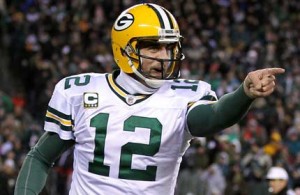
Either the New York pass rush is going to make life miserable for Aaron Rodgers or the Packers offense is going to have its way against a banged up and beatable Giants secondary.

Whoever blinks first will be in a heap of trouble.

If Jason Pierre-Paul, Justin Tuck, Chris Canty and Osi Umenyiora are eating Rodgers’ lunch from the opening whistle, the likely NFL MVP will start having flashbacks to Week 15, when Chiefs linebacker Tamba Hali (three sacks) took up residence in the Packers’ backfield and Kansas City held Green Bay to 315 total yards and 14 points.

In that scenario, the Giants’ front four will suddenly see a redux of Super Bowl XLII against the Patriots, which will only fuel them further.

In the alternative scenario, the Giants’ pass rush will fail to harass Rodgers, which will enable the Packers to jump out to an early lead. When – as is often the case – Green Bay plays from ahead, it not only puts pressure on the opposing offense to match scores with one of the highest-powered attacks in the league, but it also allows Clay Matthews, Charles Woodson and the Packers defense to start inching upfield and sniffing out big plays.

Part of the reason Green Bay led the league with 31 interceptions and ranked behind only San Francisco with a plus-24 turnover differential in the regular season is because playmaking defenses have the benefit of becoming even more opportunistic when playing from ahead.

If the Giants’ pass rushers throw the first blow and Eli Manning puts points on the board before Rodgers, Green Bay’s entire defensive philosophy will become compromised. Manning’s trio of downfield threats (Victor Cruz, Hakeem Nicks and Mario Manningham) will have to be paid extra attention by the Green Bay secondary.

This game is so close it’s pretty much impossible to call. Sometimes you have to go with your gut. In the worst-case scenario for each team, Manning has the chops and weapons to win a potential shootout with Rodgers. Rodgers, on the other hand, simply won’t have the answer if confronted by a clicking and unrelenting Giants pass rush.

History would indicate that the Giants – as well as they have played over the past three weeks – have yet to peak. The Packers appear to have already peaked.

Giants 27
Packers 24
2012 NFL Wild-Card Preview

Wild-Card weekend is nearly here and there’s lot to break down, so let’s get right to it.

Pittsburgh Steelers (12-4) at Denver Broncos (8-8)

If Ben Roethlisberger wasn’t playing with a high ankle sprain, Rashard Mendenhall wasn’t out with a torn ACL and Ryan Clark didn’t carry the sickle-cell trait, it would impossible to see this matchup ending in anything but a Pittsburgh romp.

But the Steelers are dealing with all kinds of adversity, as well as the burden of being a big road favorite in the playoffs. With the Saints’ shocking loss to the 7-9 Seahawks on the road in a 2010 wild-card game still fresh in everyone’s memory, it’s tough not to ponder the Broncos’ chances at an upset, given the circumstances.

As opposed to Seattle, which had two things going for it – a running back, Marshawn Lynch, who has a remarkable ability to get stronger as the season progresses; and a quarterback, Matt Hasselbeck, who had been to a Super Bowl – Denver is afforded no such luxuries to fall back on.

Running back Willis McGahee averaged just 78.3 rushing yards over the final four games. Quarterback Tim Tebow crashed and burned during that time, fumbling seven times (four lost) and throwing five interceptions.

The Denver pass rush, spearheaded by Elvis Dumervil and Von Miller, should be able to make life difficult for a hobbled daltonRoethlisberger and keep the game close. But for a Broncos offense that scored a combined 17 points over the final two weeks against the Bills and Chiefs, it’s going to be nearly impossible to find the end zone against a Steelers defense that ranked first in the NFL in points allowed (14.2) and didn’t give up a touchdown in three of the last four games.
The Broncos will need a defensive or special teams score to throw a scare into Pittsburgh, which isn’t likely.

Steelers 16
Broncos 6

Cincinnati Bengals (9-7) at Houston Texans (10-6)

There’s always one wild-card game game featuring a team or teams that, talent-wise, are a notch below the rest of the field. Last year it was the Chiefs, who were smoked at home by the playoff-seasoned Ravens. In 2009 it was the Bengals, in ’08 the Dolphins etc. The downfall of the so-called playoff fraud always boils down to its ability, or lack thereof, to take care of the football.

Make no mistake: Turnovers will determine the outcome of the Bengals-Texans game. Neither team protected the ball well when they met in Week 14. Houston committed four turnovers and Cincinnati two. And both teams continued to have ball security issues down the stretch. The Texans gave the football away at least once in each of their final three games, and turned it over nine times from Weeks 14-17. The Bengals have also yet to play an errorless game in that stretch, tallying six turnovers.

A closer look paints an even darker picture for the Texans. Of those nine turnovers, five were committed by T.J. Yates. The rookie quarterback threw three interceptions and lost two fumbles over the final quarter of the season, while also fumbling an additional time.

Dig a little deeper and go back to Houston’s 17-10 win over the Falcons in Week 13, a game in which Yates lost one fumble, lost a second on a strip-sack that was returned for a touchdown before a pair of bizarre offsetting substitution penalties called it back, and threw an interception that was returned for a touchdown in the fourth quarter. That play was overturned because of a holding penalty, taking a second defensive score off the board for the Falcons.

Certain contests, despite the outcome, can serve as a harbinger of things to come. The Atlanta game was noteworthy in that respect.

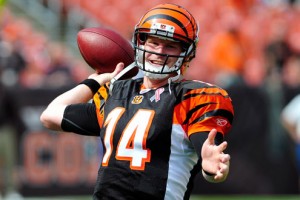
On the flipside, Bengals quarterback Andy Dalton fumbled one time and threw just one interception from Week 13 on.

Not to be lost in the mix are the issues of Texans star running back Arian Foster, who has put the ball on the ground in four of the last five games, fumbling a total of five times (three lost).

Considering either one or both of Yates and Foster will be touching the ball on every snap – or, gulp, Jake Delhomme – Houston’s recent problems taking care of the football are unlikely to suddenly vanish. Dalton may be a rookie quarterback going on the road for his first playoff game, but all the pressure is on the Texans to come through in the franchise’s maiden postseason appearance. How does Houston respond following a turnover late in a tight game that hushes an anxious crowd? The writing is on the wall for an upset.

Bengals 20
Texans 17

Atlanta Falcons (10-6) at New York Giants (9-7)

With the Giants, it’s a ongoing case of Jekyll and Hyde syndrome. Which team is going to show up? The one that nearly knocked off the undefeated Packers in Week 13 and followed with three stirring victories in the final four games (two over Dallas and one over the Jets)? Or the one that got flattened by the Redskins in a critical Week 15 tilt?

Anyone who is able to properly diagnose the Giants can predict how this game will play out. The Falcons couldn’t be any different than New York, in that you know what you’re getting from them. According to the number-crunchers at Football Outsiders.com, Atlanta is the most consistent team ever measured by its DVOA (Defense-adjusted Value Over Average) system.

The Falcons play at a similar level week in and week out, a level that was good enough to knock off the likes of Detroit, Tennessee and Carolina, but not the Saints, Packers or Texans.

Looking at the Giants, it’s easy to finger the Redskins loss as evidence of a similar performance looming in the playoffs. But the Redskins also handily beat the Giants in Week 1, which suggests they may have simply had their number this year. The ebbs and flows of divisional rivalries can be tough to quantify sometimes.

The Giants fell victim to the most brutal of stretches from Weeks 9-13, during which they faced, in succession, the Patriots, 49ers, Eagles, Saints, and Packers, arguably the five best teams in the NFL.

The Falcons are consistently decent but never spectacular. The Giants are better than their record and playing at home. staffordA primary strength of both teams is their ability to throw the football. Eli Manning has a Super Bowl MVP; Matt Ryan is 0-2 in the playoffs.
Giants 27
Falcons 21

Detroit Lions (10-6) at New Orleans Saints (13-3)

Winners of eight straight, the Saints are blistering hot. Drew Brees has thrown 27 touchdowns and four interceptions throughout the win streak, during which New Orleans has averaged nearly 37 points per game, including back-to-back 45-point eruptions against the Falcons and Panthers at the Superdome to close out the regular season.

To underscore just how unstoppable the Saints have been, consider the following: They had 10 drives apiece in those games. Against Atlanta, those drives went touchdown, touchdown, interception, touchdown, interception, touchdown, field goal, punt, punt, touchdown. One of Brees’ picks came in the end zone and the pair of punts didn’t come until New Orleans had a 38-16 lead in the fourth quarter and had taken its foot off the pedal.

The Saints’ efficiency against Carolina was even more ruthless: touchdown, touchdown, interception, field goal, touchdown, touchdown, touchdown, touchdown, punt, downs. Brees was picked at the Panthers’ 11-yard line and the Saints had driven 63 yards to the Carolina 13 before Chase Daniel took a knee four times to conclude the game.

If any team stands a chance of hanging with the Saints in the dome, it’s the Lions. Led by a white-hot Matthew Stafford, Detroit finished the season with wins in three of its last four games. Stafford threw for 520 yards and five touchdowns in a wild Week 17, 45-41 loss to Matt Flynn and the Packers. He has averaged nearly 378 yards per game in that span, throwing 14 touchdowns and only two interceptions.

The Lions have made a habit of getting down big early before surging back. Detroit has overcome deficits of 13, 17, 20 and 24 points to win. Stafford has been at his best in the second halves of those big comebacks against the Raiders, Panthers, Vikings and Cowboys.

The problem with that formula is that it requires the other team to either have a quarterback prone to making multiple huge mistakes (Tony Romo, Cam Newton) or an offense that can be stopped for consecutive drives (Vikings, Raiders).

Brees won’t be gift-wrapping any turnovers and the Saints’ last 20 drives don’t bode well for a Lions defense that has allowed an average of 26.5 points and 455 yards per game over the last four, and a Stafford-led offense that tends not to get its wheels turning until the second quarter. Brees will be motoring toward San Francisco by that time if Detroit stalls out of the gate Saturday night.

Saints 41
Lions 27

A six-pack of observations heading into the NFL playoffs

Before diving headfirst into Wild Card weekend (complete game-by-game breakdown to come Thursday), let’s first take a broad view of the 2011 NFL season, one which almost didn’t happen (but not really).

1. Parity officially took hold in 2011

Of all the professional sports leagues, the NFL routinely features the most turnover among playoff participants.

This year is no different, as six teams (Giants, Lions, 49ers, Texans, Broncos, Bengals) are returning to the postseason after varying hiatuses. The Lions end the NFL’s longest playoff drought (1999) while the Texans are set to play in January for the first time since entering the league as an expansion team in 2002.

breesBut the league-wide parity runs even deeper, with eight teams having finished 8-8, the most since 2006. An additional five squads went either 7-9 or 9-7, meaning a full 40 percent of teams settled in the seven-to-nine win range.
2. A top-heavy league officially took hold in 2011

Yes, that statement is in direct contradiction to the previous one, yet for only the second time since the NFL expanded to a 16-game schedule in 1978, four teams reached the 13-win mark (Packers, 49ers, Saints, Patriots).

As opposed to 2007 – when the Patriots and Colts in the AFC and the Packers and Cowboys in the NFC all won at least 13 games – three of the four 13-win teams reside in the NFC this year.

Losing the conference-record tiebreaker to San Francisco means New Orleans becomes the first team in the 16-game format to win at least 13 and have to play Wild Card weekend.

3. Of the 12 playoff teams, seven are title contenders

Let’s start by crossing off the non-contenders. In the AFC, the Broncos – losers of three straight – are only in the tournament because San Diego and Oakland (both superiorly talented teams) were unable to overcome their respective mid- and late-season swoons. The Bengals went 1-6 against teams with winning records and the Texans fell flat over the final three games, the weight of the losses of Mario Williams, Andre Johnson and all of their quarterbacks too much to bear.

In the NFC, the Falcons are a classic beat-up-on-the-cupcakes and struggle-to-hang-with-the-brass team, their most notable victory coming back in October against the Lions in Detroit. The Lions, meanwhile, are too young and undisciplined to make a serious run.

That leaves the Patriots, Ravens and Steelers in AFC, and the Packers, 49ers, Saints and Giants in the NFC. Early edge in the AFC goes to New England, because Tom Brady is the only elite/healthy quarterback in the field. The NFC figures to be a dogfight from the start; while the Falcons and Lions will ultimately be overmatched, they are both better and/or healthier than any of the AFC’s bottom three. Naturally, Green Bay is the odds-on favorite to repeat as Super Bowl champs. However …

4. Beware of the 15-1 curse

Before the 2011 Packers, only four teams had completed a campaign 15-1. The first pair (1984 49ers and 1985 Bears) finished the job and went 18-1. The most recent two, however, saw their seasons come to crashing halts before reaching the Super Bowl.

The 1998 Vikings, led by Randall Cunningham, Randy Moss and Cris Carter, were bounced by the Falcons in the NFC Championship when Gary Anderson hooked a would-be game-winning 38-yard field goal, after going 39-for-39 up until that point. And the 2004 Steelers, after snapping the Patriots’ NFL-record 21-game win streak in October, were undressed by Tom Brady and Co. at Heinz Field in the AFC Championship, 41-27.

That’s not to say the Packers are destined to fall victim to recent history, though that does bring us to …

5. Beware of the New York Giants

If Eli Manning and the Giants have proven anything, it’s that they are never to be underestimated when the deck is seemingly insurmountably stacked against them. Who can forget the colossal effort the Giants put up in a meaningless Week 17 defeat to the 15-0 Patriots in 2007, a loss that served as a springboard to a rematch in Super Bowl XLII that no 120609Giants08kcfootball fan will ever forget.

Forget the symmetry between the identical 38-35 scores by which New York lost to New England in 2007 and Green Bay in Week 13. Forget that Manning used that Packers loss to rediscover his mojo (likewise for the New York pass rush) and lead the G-Men to (another) improbable postseason berth.

Actually, scratch that. Remember it all. And when the Giants are headed to frigid Lambeau Field in two weeks, remember it was Manning who took down the mighty Packers in Brett Favre’s Green Bay swan song four years ago.

6. The Patriots are somehow under the radar

Which is to say they are exactly where they want to be. Has a team that finished the regular season on an eight-game winning streak ever gone into the playoffs with more baggage? From an historically bad pass defense to injuries up and down the unit to multiple-score deficits faced in each of their last three contests, there is ample reason to doubt the Patriots.

That, along with an 0-3 run in the playoffs dating back to Super Bowl XLII and including home defeats to begin the last two postseasons. A combined 27-5 record over the last two regular seasons sure doesn’t buy what it used to.

While it’s crystal clear New England has its flaws, can a case truly be made that Pittsburgh – with an injured Ben Roethlisberger, no Rashard Mendenhall and a defense that ranked last in the AFC in takeaways – and Baltimore – with its persistent road woes, an unreliable Joe Flacco and a secondary that can get be beat – are in any better shape?

Apparently so.

Taking in a striking NFL landscape

With the NBA lockout threatening to swallow up the entire 2011-12 season – and slam shut the closing window on the Celtics’ chances at one final title run – it seems like a good time to relish the presence of football, and what has thus far been a riveting 2011 campaign. Consider the following:

• For the first time since the late 90s, the two undisputed best teams in the league (Packers, 49ers) reside in the NFC.

• Three quarterbacks (Brees, Brady, Rodgers) are on pace to annihilate Dan Marino’s single-season passing record of 5,084 yards.

• In this new era of gaudy air attacks enabled by concussion-related rules in place that essentially force defenses to play with one arm tied behind their backs, Tim Tebow is 3-1 as an NFL starter while running an offense that bears more resemblance to Navy’s than any other NFL team.

• A neck injury has proven beyond any reasonable doubt that Peyton Manning is the most important/valuable/indispensable player/coordinator/on-field general to his team in the history of the sport.

Typically, by mid-November all the chatter is geared toward which squads are contenders and which are bound to regress to the mean. That’s because roughly half of the teams are at or above .500 around Thanksgiving, but in reality at least bradybelichickone-third of those “playoff-hopefuls” are nominally such, and nothing more (aka the pretenders).
These days, however, there are a pair of juicier subplots that need to be investigated in more detail before the annual playoff-push commences.

Reports of Patriots’ demise premature … again

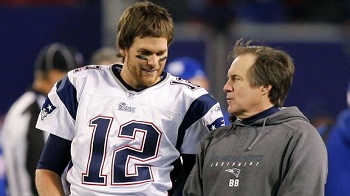
By tuning up the Jets on Sunday night, Bill Belichick and Tom Brady notched win No. 117 together, passing the Don Shula/Dan Marino tandem for first on the all-time victories list. The caveat being they did it in 35 fewer games.

So how does this relate to the here and now? First, it’s officially silly to write off the Patriots in the regular season. Period. Naysayers, naturally, have free rein to trash New England for its recent playoff inadequacies. That hate is founded for a team that is a combined 41-16 (.719) in the regular season since its last postseason win. Second, to not give New England the benefit of the doubt in a division it has owned each of the last seven years Tom Brady has been on the field is shortsighted.

Now, considering the cupcake schedule the Patriots are staring at over the stretch run, it’s going to be tough to legitimately appraise what looks like, at worst, a 12-4 team. The real answers won’t come until January. But teams start to develop patterns by this time of the year, which slowly evolve into identities.

As opposed to recent New England outfits – which, let’s face it, were gifted with talent but plagued by a soft underbelly – this squad has a certain spunk to it. The next-hand-on-deck mentality that was the hallmark of the title teams has made a cameo, most notably on Sunday night, when the Patriots trotted out of a defensive backfield that had even the omniscient Al Michaels grasping at straws in pursuit of arcane nuggets. Alas, even Google only knows so much about the Sterling Moores, Antwaun Moldens and Niko Koutouvides of the world.

Lest we forget, the Patriots of yesteryear were perennial long shots and afterthoughts – rife with castoffs and perceived nobodies – but they embodied the intellect, discipline and toughness of their pair of leaders, which permeated through the ranks, 1-through-53.

Preparation and toughness, more than anything else, wins in January. And while the Patriots have already lost more games than all of last regular season, it’s been their resiliency that has kept them hanging around until the bitter end of tilts against the Cowboys, Steelers and Giants that they had no business winning (something that can’t be said of Jets 28, Patriots 14; and Browns 34, Patriots 14).

aaron-rodgersThe Packers are frighteningly good

Not exactly a newsflash, I know. But for those counting at home, Green Bay has not lost since dropping a 31-27 affair in New England last December … with Matt Flynn at quarterback. Since then, it’s been two wins to close out the 2010 campaign, four more en route to a world championship, and nine straight to begin the title defense.

Between the 15-game win streak, the otherworldly play of Aaron Rodgers and the 2007 Patriots still fresh in everyone’s memories, it’s difficult not to at least start thinking about the possibility …

Here’s my two cents: With a Thanksgiving game in Detroit and a trip to the East Coast 10 days later to face a Giants squad that is well-constructed to give the prolific Packers’ offense fits and also capable of putting up its fair share of points (ie the formula for beating Green Bay), I’m not ready to say the 2011 Packers are 16-0 in the making.

Though this is without a doubt the fiercest squad since the ’07 Patriots, and right there with the ’01 Rams as a team you must absolutely conjure up the perfect game plan for – and execute flawlessly – to even have a chance of prevailing.

In addition to the seemingly limitless explosive offensive potential of Rodgers and Co., the much-maligned Packers defense is a good deal better than it gets credit for. When Clay Matthews is flying off the edge and forcing quarterbacks into accelerating their progressions, and when Green Bay’s All-Pro caliber corners are playing off one another and in cohesion – as opposed to bickering among themselves – that D is a unit to be reckoned with (see: Packers 45, Vikings 7)

That said, Green Bay still has the feel of a 15-1 team with the potential to go 18-1 (the right way).

Thoughts on LeBron …

I was at my buddy’s place for the “The Decision”, aka King LeBron’s “Fate of the Union” address.

As Jim Gray built the suspense for the millions (and possibly trillions) of spectators glued to their television sets, we came to the following conclusion:

There was no way LeBron was going to Miami. Not if he was the alpha dog competitor he’s led us to believe he is for all these years, the guy whose drive to become the next Michael Jordan, the first LeBron James, was genuine. The guy who wanted to be as dominant and prolific as MJ on the court and as global as Jay-Z off it.

That guy, we determined, would never in a million years resign himself to the fate of second fiddle. That guy would diplomatically cut ties with the team he was loyal to but that could never provide him with an adequate second fiddle. He would apologize to the city of Cleveland, thank them for the memories and announce he was going to Chicago, where as destiny would have it, something darned close to the mid-90s Bulls would be awaiting him.

If Derrick Rose, Carlos Boozer, Joakim Noah and Luol Deng aren’t Scottie Pippen, Toni Kukoc, Dennis Rodman and Steve Kerr, they are surely in a neighboring area code. Tell me that assemblage of talent wouldn’t win multiple titles with a Jordan.

With a Jordan …

It was all there, tidily laid out for the King. From a booming and cosmopolitan city that could serve as his global platform to the complementary stars in place and right down to the building he would call home while adding more banners to the six already hanging in the rafters.

Instead he copped out. Actually, that’s not entirely true. The persona he conveyed and led us all to believe was really him copped out.

There is no debating that. Not when he’s joining forces with Dwyane Wade and Chris Bosh on a team not called “USA”. Not when he’s coming to Wade’s city, a place that has already hoisted the Larry O’Brien trophy courtesy of a Herculean effort by the Man himself.

Americans hate being duped. And that’s exactly what LeBron did to us for the last seven years. He made Joe Sports Fan believe he was the Chosen One, he made Cleveland believe he was the Messiah.

When it didn’t work out, Joe Sports Fan couldn’t really blame him. The Celtics were a better team than the Cavaliers in 2008 and ’10; the Magic were a better team in ’09. That was the window for these Cavs and the complementary talent simply wasn’t sufficient. That wasn’t LeBron’s fault. It was the Cleveland front office’s fault.

But that doesn’t change the dynasty on a platter that was served up to LeBron in Chicago. He could have had everything, and all he needed to do was sign on the dotted line, look into the camera and tell the world the next chapter in the brief but storied history of the Chicago Bulls was about to be written. By LeBron James.

Instead of penning that next chapter – as well as the defining chapter of his own monolithic legacy – in Chicago, he opted to become the copy editor for the Miami Heat.

For the next six years he’s going to correct some grammar, rearrange some sentences and of course, rewrite some endings. There is no doubt a successful writer is only as good as his editor. But no matter how great the editor and how much he facilitates the success of the writer, his accolades will always be secondary.

Lots of bling is coming for LeBron. The question is will he ever come to peace with the realization that Pippen is now officially the ceiling for his legacy as a player in this league.

Vancouver 2010: The American Olympiad

There’s always a large swath of the American public that takes little interest in the Olympic Games. Some haven’t the time to follow them; others are irked because “30 Rock” and “The Office” go on a two-week hiatus. Many simply don’t care.

For those who do give a hoot, the 21st Olympiad was pretty cool, no pun intended (particularly considering the downright balmy temperatures that hung over Vancouver for the bulk of the Games).

With the 30th anniversary of the “Miracle on Ice” serving as a motivational backdrop, American hockey sliced its way back into the national conversation. US skiers carved out stories of redemption (Bode Miller) and overcoming adversity (Lindsey Vonn) while cutting up the slopes of Whistler Creekside. Shaun White soared, American bobsledders slid and Apolo Ohno skated into the annals of history.

Overall, by capturing an Olympic-record 37 medals, Team America owned the winter podium for only the second time ever, and first on foreign soil.

Oh yeah, and Stephen Colbert was there too.

30 years after “The Miracle”, there was nearly another

Only history will determine how the 2010 US Hockey team is remembered. Even now it’s a matter of perspective. Did they earn a silver medal or lose a gold? It’s obvious which answer players would give, but they are competitors. There is no tougher second-place to accept in sport than Olympic silver in hockey. Especially when you scratch and claw back from a 2-0 deficit to tie the gold medal game with 24 seconds left against a team of behemoths on their home ice, as the Americans did in what became a truly seismic tilt, on this continent at least.

Hopefully, at some point, the players will be able step away from the moment that slipped away and appreciate what they accomplished.

Before Sidney Crosby, the poster boy of these Olympics and the sport itself, found the goal a little more than seven minutes into overtime, Team USA had won every game it played, including a 5-3 victory over Canada in the group stage that sent the alert level of the host nation to red.

While Team Canada boasted nine of the 30 NHL captains, including the entire front line of the San Jose Sharks, the league’s second-best team, the Americans were built almost in the spirit of the 1980 Miracle squad: young, physical and vibrant. They may not have finished the job like their Lake Placid counterparts, but tournament MVP Ryan Miller, Zach Parise, Jack Johnson and the rest of the unlikely almost-champs put hockey back on the map in this country.

Day 1 and Day 14: Swings that helped secure the medal count

Perennial winter powerhouse Germany finished seven behind the USA in the final medal count, with 30. That difference could have been far more tenuous, had it not been for two defining events.

Day 1: Men’s 1,500 meter short-track race. Coming into the final turn, Koreans were poised to sweep the medals until Ho-Suk Lee attempted to pass his teammate Si-Bak Sung, causing both to crash and paving the way for a pair of Americans, Apolo Ohno and J.R. Celski, to steal silver and bronze. A huge four-medal swing on the first evening of competition.

Day 14: Women’s Bobsled. The Germans, notorious for their recent domination of the bobsled events, were left off the podium after Germany 2 – leaders after two runs – crashed on its third run, allowing USA 2 to snag an unlikely bronze. That two-medal swing enabled the US to widen its overall lead to 28-24, a lead it would not relinquish.

Alpine-racing torch passed from Austrians to Americans

By far the biggest cumulative surprise of the Games was the US Alpine team stealing the thunder of the Austrians.

Three Americans – Bode Miller, Lindsey Vonn and Julia Mancuso – made repeat trips to the podium. Along with Andrew Weibrecht’s bronze in super-G, the US team compiled a remarkable haul of eight medals, three more than their total from the Nagano, Salt Lake City and Torino Games combined. The Austrians, who racked up a whopping 34 medals during the same time period, were held to four in Vancouver.

That doesn’t even include an utterly bizarre incident in the women’s giant slalom, when Vonn crashed and Mancuso, already on the course as the next racer with Vonn still immobilized, was yellow-flagged and halted halfway down as a precaution. A favorite to take gold in the event, Mancuso finished 18th after the re-done first run, her emotional state and overall focus visibly altered, along with the course itself considering she had to wait another 15 racers to go.

Despite the unfortunate/unacceptable occurrence, it was nonetheless an historic two weeks in the mountains north of Vancouver for the American downhillers.

Colbert Nation in Vancouver: Splendid entertainment

For those who missed it, US Speedskating was in dire straits after losing its main sponsor, the bankrupt Dutch bank DSB.  Facing a funding shortfall of $300,000, Stephen Colbert used his “Nation” to bankroll the team, and in return was given an honorary spot on the team as the designated “assistant sports psychologist”.

Weaving the access into an overall package he deemed “Exclusive Vancouverage of the Quadrennial Cold Weather Athletic Competition” (so as not to upset NBC and its stranglehold on coverage rights), Colbert bummed his way around the Olympic Village, gained interviews with the likes of Vonn, Shani Davis and even Bob Costas, and of course, diligently fulfilled his duties as the assistant shrink to “his” athletes.

Let me be the first to say it: London 2012 needs Colbert.  Here’s to hoping the US Swim team was sponsored by Bear Stearns.

Super Bowl XLIV: Karma Says Saints

The concept of karma can be a tricky topic to tackle. (Who hasn’t seen The Matrix?) Apart from the religions of Hinduism and Buddhism (and Neo and Morpheus), karma — or the general idea of destiny — is most readily applicable to the quasi-religion of sports.

Two years and two days ago, on Feb. 3, 2008, the New York Giants beat the 18-0 New England Patriots to capture Super Bowl XLII. The events of that night led many to assert the Patriots fell because they had messed with karma. There was SpyGate. There was running up the score. There was the terse arrogance of Bill Belichick and his (bleeping) humble pie. Added up, it all made casual fans want to vomit.

The football gods, if they were out there, couldn’t allow their game to be sullied.

That’s what facilitated The Helmet Catch, The Samuel Botch and every element of the flawless performance the Giants put on that evening. Or so goes the narrative of the superstitious. Purists would say the Giants simply came out and hit the Patriots in the mouth and didn’t relent.

Either way, it’s evident in hindsight the Patriots were not meant to go 19-0. Superstitions aside, let the record show they weren’t even supposed to have gone 12-0. The Ravens had them beat in a bone-crunching Monday Night game in early December, but a holding call in the end zone against Baltimore enabled the Patriots to cap off a disputed comeback.

Now look at this season. The Colts, led by the true poster boy of the NFL (sorry, Tom Brady fans), were winning games. Peyton Manning wasn’t using imported mercenaries to blow teams out of the water by 40 points. On the contrary, he was grooming young and inexperienced players with on-the-job training, combining his excellence with their potential to eek out contests with a late-drive here and a big play there.

After a stirring 17-point fourth quarter comeback vs. the Patriots pushed Indy’s mark to 9-0, the murmurs began. Could it really be? Is this that team? Are Austin Collie and Pierre Garcon those guys?

Once the Saints fell to the Cowboys and the Colts marched on to 14-0 with yet another late rally against Jacksonville, it became apparent. No one was going to beat this team, not in the regular season at least.

Yet for some reason, the Colts staff, without the blessing of its players, opted to lay down and cast aside a chance at history, at immortality.

Until that point, they had done everything the right way. No ulterior vendettas. No disputed calls. Just some of the finest football you’ll ever see, orchestrated by one of the all-time greats.

Whereas New England decided to screw karma, the Colts actually had it on their side, and politely passed. Now they enter Super Bowl XLIV, a game that even if they win will be accompanied by a collective bittersweet taste, because of what could’ve been. That’s not good karma.

The city of New Orleans and its football team know a thing or two about not-good karma. The Saints have embodied it throughout their history and the city has endured dose after dose of it ever since the first winds of Hurricane Katrina began to blow.

But both, although improbably, are still standing. The Saints are in the Super Bowl for the first time in their 43-year history and New Orleans, while still far from a true recovery, is alive as ever.

The Saints have already booked a parade. No, it’s not a preemptive victory march. It’s a win-or-lose celebration, because win or lose, they have something to celebrate. They have the Saints. They have N’awlins.

Now that’s some good karma.

Saints 37
Colts 34

Goats Pave Way to Championship Weekend

The three biggest games of the NFL season have still yet to kick off, but the theme of the 2010 playoffs has already been etched. Ladies and gentlemen, welcome to The Year of the Goat Kicker.

How we got here is tough to tell, but the explanation for what’s gone down might actually be pretty simple.

Kickers have always been the bastard child of the football family. The characteristics that define ninety-nine percent of NFL players — namely big muscles and bigger bravado — are mostly absent in the kicker (exception: Sebastian Janikowski).

The kicker is not required to throw or catch the football. He doesn’t have to memorize hundreds of playbook pages, doesn’t need to know blocking assignments or hot reads. On occasion he’s expected to make a hit, but that’s as the last line of defense when the kick coverage has completely broken down and he’s being counted on to take a good angle and hopefully run the returner out of bounds. Rarely chest-bumping stuff.

The kicker’s job is straightforward — between the uprights and over the crossbar — but his cause is often misunderstood. On a 53-man roster he’s the furthest thing from a “football player”. But at least a handful of times a year and frequently in the playoffs he trots onto the field — his compatriots physically battered and exhausted on the sidelines — representing the tenuous difference between a “W” and an “L”. If the kick is good, he’s the hero, probably gets the game ball. If it’s wide or short, he’s the goat, forced to walk the ultimate walk of shame.

No matter what, he’s estranged to those around him, the recipient of visceral and extreme emotional reactions with no middle ground. And that’s just it. In the ultimate team and man’s game, the kicker struggles not against the opposition, but rather against himself and on occasion, the elements. He can’t relate to anyone else on the field (minus his counterpart on the other team) and they can’t relate to him.

When he steps onto the field with the game on the line, you can be sure all that is swirling around in his head. The physical act of booting the ball is a unique skill he’s honed to near-perfection over years of practice. That is, after all, why he has the job. But the mental burden he carries out there with him, that is what he must conquer in the precious few seconds he has before the ball in snapped and the hold is down.

If he fails, then a kick so expected, so easy he probably literally does it in his sleep, suddenly sails wide.

How else can you explain the league’s most accurate kicker during the regular season (Neil Rackers – 94.1 percent) pulling a shankapotamus on a 34-yard game-winning chip shot vs. Green Bay? Or the most accurate kicker in NFL history (Nate Kaeding – 89.1 percent) yanking a couple of typical gimmes that combined to be the difference in the game vs. the Jets?

In Kaeding’s case, there are clearly some demons present when it comes to the Jets and the playoffs. In the 2005 postseason, as a rookie with the AFC West champion Chargers, Kaeding missed a 40-yarder in overtime at home vs. New York. The Jets won the game and advanced. Kaeding, evidently, never forgot about that kick and it came back to haunt him.

Rackers’ ill-fated boot vs. the Packers was essentially missed before he connected with the pigskin, his form was so visibly altered.

With such a widespread trend of missed field goals over the last three weeks (in addition to Kaeding and Rackers, Shaun Suisham of the Cowboys failed to do his job twice vs. the Vikings), the question becomes: Is there a connection? I say yes, and it goes back to the first game of the playoffs, between the Bengals and Jets.

Cincinnati’s Shayne Graham went wide left and wide right from 35 and 28 at home to begin wild-card weekend, helping the underdog Jets pull out the victory. That he missed one was surprising, but not out of the realm. Shanking both of them was downright shocking. To say the ripple effect that resulted was pure coincidence would be to fail to appreciate the plight of the kicker.

There are still a pair of championship games and a Super Bowl to be contested before the final curtain drops on the ’09 season. The numbers would indicate at least one of those affairs will come down to a kick. Whether it’s Jay Feely (Jets), Matt Stover (Colts), Garrett Hartley (Saints) or Ryan Longwell (Vikings) lining up for the destiny-altering strike, aside from holding the fates of their franchises in their right foot, you can count on them sharing one common bond: temporary amnesia.

Onto the championship previews.

AFC Championship – New York Jets (11-7) at Indianapolis Colts (15-2)

The Jets beat the Chargers because their defense kept them in the game throughout the first half, limiting San Diego’s high-scoring offense to a touchdown and missed field goal attempt. The New York offense punted the ball on each of its six first-half possessions.

That formula would lead to most teams’ demise, but the Jets are not afraid to give the ball to the opposition because of the immense confidence they have in their defense. It all starts at the top with Rex Ryan’s schemes, blitz packages and cockiness.

Ryan loves to bring pressure from all over the place. He’s particularly endeared to the zone blitz (where linebackers or safeties rush the passer while linemen drop into zone coverage), a tactic that ultimately forced Phillip Rivers into many uncomfortable situations that ended with poor throws or turnovers. The difference between Rivers — or any other quarterback for that matter — and Peyton Manning is Manning licks his chops when he senses the pressure because he knows there are one-on-one matchups on the outside he can exploit.

The key to beating Manning is twofold. First, it’s vital to disguise coverages as long as possible so he can’t make line audibles. Second, a delicate balance must be struck between removing him from his comfort zone (the pocket) with some pressure and employing a variety of crafty sub packages. When the Patriots knocked off the Colts in the 2004 and ’05 playoffs, they did so by relying heavily on packages with five, six and sometimes seven defensive backs.

There’s no way the Jets can beat the Colts by blitzing at the same 60 percent rate they have throughout the playoffs. But they’ll still have the luxury of being able to send extra guys because Darrelle Revis and Lito Sheppard have the ability to lock down their receivers one-on-one on the outside. The Jets defense won’t give up the big play, but Manning won’t force the issue. If he has to dink and dunk his way to the AFC title (much like he did to capture Super Bowl XLI vs. the Bears), then that’s what he’ll do.

As effective of a game-manager as Mark Sanchez has been, he’s going to have to deal with the best pair of edge pass rushers in the league in Dwight Freeney and Robert Mathis. A big sack late by one of them will end the J-E-T-S miracle run.

Colts 22
Jets 16

NFC Championship – Minnesota Vikings (13-4) at New Orleans Saints (14-3)

Brett Favre and Adrian Peterson may be the faces of the Vikings franchise, but Minnesota’s defensive line has been the team’s X-factor all year.

It was the impetus of a pair of huge regular season wins over the Packers, as Jared Allen, Pat Williams and Ray Edwards accounted for 10.5 of the 14 sacks recorded by the Vikings defense. And after struggling to pressure the quarterback throughout the stretch run, the Minnesota quartet up front once again dominated the line of scrimmage in last week’s 34-3 pummeling of the Cowboys.

If Favre expects to return to the Super Bowl for the first time in over a decade, he’ll have to put a lot of points on the board while avoiding the costly mistakes that thwarted him the last time he played in an NFC Championship game (2008 vs. the Giants). He’ll also need his defense to come up big. If the Vikings D-line can’t generate consistent pressure on Drew Brees, the Saints slinger will carve up a vulnerable Minnesota secondary.

The Saints love getting off to fast starts at home, and in turn the Superdome crowd loves going wild. Unless the Vikings can throw the first and second blows, they will be on the other end of the marked home field advantage they enjoyed at the Metrodome last Sunday vs. Dallas.  For a team that was a mediocre 4-4 on the road in the regular season and hasn’t won a game away from home in nearly three months, going into the most charged atmosphere in the league is a tall order.

The Saints have never hosted an NFC Championship game, but their building has hosted National Championships and Super Bowls. Now it finally has the opportunity to send its team to the Big One.

Saints 30
Vikings 24

Divisional Preview for the Bettors

Some leftover ramblings from a nightmarish wild-card weekend.

Going 0-for-4 on a playoff weekend is an experience. It’s tough to do. Believe me, I just did it.

Watching your team — The Team Of The (past) Decade — get doused with lighter fluid on the first play of the game (Ray Rice 83-yard touchdown run) and lit by a match on the fourth (Terrell Suggs strip-sack of Tom Brady) before becoming engulfed in flames and frantically flailing about for the next three hours was … (sigh).  OK, here goes: painful, aggravating, enraging, saddening, shocking, bewildering, grounding, amusing (kidding).

The Bengals ought to be ashamed of themselves. Turnovers, mindless penalties at home, poor receiving, poorer quarterbacking, and a pair each of the worst challenges (see: Lewis, Marvin) and most hideous field goal attempts (see: Graham, Shayne) you’ll ever see. Sorry, Cincinnati. You were unfairly duped again. Cedric Benson was the only player wearing a Bengals uniform who deserved to be on the field Saturday.

Of all the picks gone awry, Dallas is the one I regret the most. I weighted far too heavily Donovan McNabb’s track record in playoff openers, the fickle nature of the NFC East and the Cowboys’ knack for January disasters. I also failed to give Dallas its due. Ending the Saints’ perfect season in the Superdome and shutting out the Redskins and Eagles in succession was as much of a forewarning as a team could give, and I missed it. D’oh.

Green Bay got screwed. Not only did the Packers salvage an atrocious weekend of football by displaying what neither the Eagles or Patriots could — some spine — they came all the way back from 21 points down and won the coin flip in overtime only to have the refs stick it to them. On second-and-10 from the 20, the officials flagged Green Bay for a hold, yet failed to offset that penalty with what was a blatant helmet-to-helmet hit on Aaron Rodgers.  On the ensuing third-and-5, Michael Adams came off the end and used his right hand to strip the football from Rodgers, except he also clearly grabbed and twisted Rodgers’ facemask in doing so.

Those missed calls jobbed Green Bay and absolutely destroyed many bettors.  The Vegas line on the Cardinals-Packers game opened at Arizona minus-3 and closed at Green Bay minus-3.  That means so much money was placed on Green Bay at plus-3, plus-2.5, plus-2 etc., the Vegas bookmakers kept having to lower it to get some action on the Arizona side.  What resulted was a six-point swing of the spread, the likes of which is rarely seen in an NFL playoff game.

Only the whales who saw the value in getting in on the other side of said six-point swing — and thus laid heavy money on Arizona at plus-3 Sunday morning — ended up profiting from this one.  Even then, those wiseguys were essentially hedging their bets because it was their big money that served as the impetus for such a wild line shift to begin with.  So basically, as was the case with the epic disaster that Panthers-Cardinals turned out to be last year, the bettors took a sizable beating last weekend.

Now if gambling were legal, someone like yours truly would’ve probably thrown a four-team parlay with his winners, immediately lost, tried to make up the weekend by parlaying the Pats, Packers and the Packers over, lost again, and tried one more time to salvage something with a Packers/Packers over parlay on Sunday afternoon.  Phew.  At least gambling isn’t legal.

Let’s move on.

Arizona (11-6) at New Orleans (13-3)

In a nutshell: After watching them hang 51 on one of the hottest teams entering the postseason — not to mention the No. 2 defense in league — it’s clear the Cardinals can score on anyone, anytime. And fast. Problem is, their defense is still pretty banged up (and was never a stingy unit to begin with), and the Saints, in their building, should be able to move the ball at will on Arizona. This game will come down to ball security, particularly for New Orleans, as Arizona’s D has always been predicated on forcing turnovers.

If gambling were legal: The divisional schedule couldn’t have shaken out more favorably for the bettors, as this game is the toughest call of the weekend. Arizona has spent the last two Januarys busting everyone up in Vegas and defying the so-called “prognosticators”. With the Saints giving seven points, the smart-money move is to take those points with Arizona. Even if New Orleans is up by 14 or 17 in the fourth quarter, a couple of late drives led by Kurt Warner can probably cover that spread. The over — even though it seems astronomically high at 57 — also seems safe. Of the 18 playoff games that have been played in domes since 2000, the average total has been 56 points.

The pick: Saints 36 Cardinals 31

Baltimore (10-7) at Indianapolis (14-2)

In a nutshell: History says the Colts, when they rest starters after locking up a bye in December, lose their first playoff game at home (2007 vs. San Diego, 2005 vs. Pittsburgh). It also says the Ravens are true road warriors; their three January road wins over the last two years (in Miami, Tennessee and New England) are the most in the league.

If gambling were legal: So much to sift through here. The Ravens were ever-so-close to knocking off the 9-0 Colts in November, but Joe Flacco threw a huge pick when Baltimore was driving for the go-ahead field goal attempt. With that said, the Ravens have not fared well against Indy — straight up or against the spread — over the last few seasons. They lost 31-3 in the regular season last year and 15-6 at home in the playoffs in 2006. The Colts moneyline is the only workable action in this one.

The pick: Colts 24 Ravens 17

Dallas (12-5) at Minnesota (12-4)

In a nutshell: The Vikings were far from impressive down the stretch. They got run over by Carolina (26-7) in a nationally televised game Week 15, were minced by Jay Cutler and the Bears the following Monday night, and concluded with a 44-7 pasting of a Giants team that may as well have been on the golf course. The Cowboys, meanwhile, are as hot as they’ve been since the days of their dynasty. Tony Romo is playing the best football of his career and the defensive line has been absolutely owning the line of scrimmage during the Boys’ four-game winning streak.

If gambling were legal: There are two conflicting theories at play here. One line of thinking instructs the bettor to lay the points on a home team if the line is three points or less (Minnesota is currently minus-3, with some sportsbooks offering it at 2.5). The other is to only take the points on an underdog if you expect that ‘dog to win outright. It really boils down to who you like in this game.
The pick: Cowboys 26 Vikings 24

New York Jets (10-7) at San Diego Chargers (13-3)

In a nutshell: The Jets are peaking at the right time. They’ve won six of seven, and in their victory over the Bengals last week Mark Sanchez took care of the ball and made the throws he had to make. That’s all you can ask for from a rookie quarterback in the playoffs. The Chargers haven’t lost since a Monday night game vs. Denver back on Oct. 19. They’ve won 11 straight — including at Dallas on Dec. 13 — which makes them unquestionably the hottest team in the tournament.

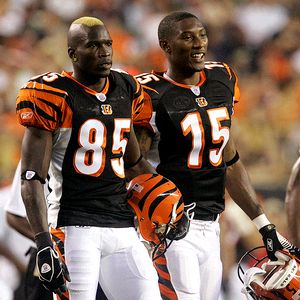
If gambling were legal: It’s been said many times but I’ll reiterate: Beware of the Round 1 team that generates so much hype the facts are ultimately overlooked. The fact is the Jets beat a mediocre Bengals team to begin with that happened to submit its worst cumulative performance (offense, defense, special teams, coaching) of the season last Saturday. The prevailing argument is the Jets are equipped to shut down the pass and San Diego can’t run. Let’s make the reasonable assumption that Darrelle Revis adds Vincent Jackson to the milk carton that already contains Chad Ochocinco, Randy Moss, Andre Johnson etc. Who’s left to defend the dynamic duo of Antonio Gates and Malcolm Floyd (both of whom resemble basketball forwards more than football receivers)? Jim Leonhard? Kerry Rhodes?  Really?  How about Darren Sproles?   Lay the eight points.

The pick: Chargers 27 Jets 13

2010 Wild-Card Preview

Three Week 17 blowouts giving way to a trio of wild-card rematches. Wow. Let’s get right to the breakdowns of a quartet of truly pick ’em Round 1 games.

NY Jets (9-7) at Cincinnati Bengals (10-6)

Make no mistake.  The Jets are dangerous.  They can run the ball and defend the run.  The defense gave up just 14.8 points per game in the regular season, best in the league.  Darrelle Revis is a shut down corner, having neutralized a handful of the finest wide receivers in the game this year (Randy Moss twice and Andre Johnson among others).  As winners of five of the last six, they’re peaking at the right time, highlighted by the 37-0 thumping they doled out to the Bengals last Sunday.

While that game should certainly help the psyche of the Jets, it was far from a true representation of the Bengals.   Cedric Benson — the eighth-leading rusher in the AFC — was inactive.  Receivers flat out dropped four of Carson Palmer’s first 10 passes.  The Cincinnati defense was without a handful of cogs, including Domata Peko, Robert Geathers, Rey Maualuga and Chris Crocker (all are expected to play Saturday).  Surely not to be overlooked is the fact the Jets were playing for their season.  The Bengals were not.
Now the tables have turned.  Cincinnati hasn’t won a playoff game in nearly two decades.  They’ve had only two chances, the most recent of which saw Palmer suffer a devastating knee injury on his first pass against Pittsburgh in 2006.  It’s taken the franchise four years to recover from that blow, and Sunday is their first chance to avenge the misfortune.  As if they don’t have enough motivation, they will also be playing in the memory of their fallen teammate, Chris Henry.

With the fans at Paul Brown Stadium foaming at the mouth, and Mark Sanchez — who has turned the ball over multiple times on six occasions this season — being counted on to lead his team to victory as a rookie in a hostile environment in the playoffs, it’s tough to see the Jets beating Cincinnati twice in seven days.  The Bengals D, which ranked ninth in the NFL with 19 interceptions, will pick Sanchez in a big spot and notch that elusive playoff win.

Bengals 19
Jets 13

Baltimore Ravens (9-7) at New England Patriots (10-6)

The Patriots have been forced to start developing a new offensive identity on the fly less than a week after losing Wes Welker to a massive knee injury.  His loss really throws a wrench into New England’s Super Bowl chances, but shouldn’t drastically affect the outcome of this game.  The Ravens are a talented team; their proponents would point to the four games they’ve lost by three points or fewer and more relevant, the 27-21 defeat they took to the Patriots Week 4 at Foxborough when Mark Clayton dropped a fourth-down pass inside the New England 10-yard line with under a minute to go.  A few different bounces of the ball and the Ravens could be 14-2.

The flip side to that is they are simply not as mentally tough as their AFC runner-up squad of a year ago.  Teams that have success in January typically aren’t on the short end of close games in the regular season, because those are the ones that are playoff-like, in that they require 60 minutes of physical commitment and superior mental toughness to prevail.  In the postseason, when talent gaps are reduced and intensity and competition levels are raised, the team with the psychological edge usually comes out on top.  Baltimore hasn’t shown any signs of having that edge in 2009.
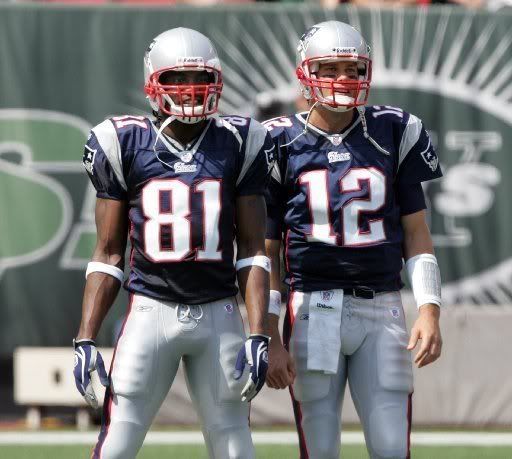
Even without Welker, the Patriots will be able to move the ball on a front-seven heavy Ravens defense.  The Baltimore corners range from decent (Domonique Foxworth) to below-average (Fabian Washington, Chris Carr).  Because of that, Ed Reed will be forced to shade towards Randy Moss all day, which should open up the middle of the field for some seam routes from the tight ends, running backs and Welker’s replacement, Julian Edelman.

When two teams are relatively even on paper, as the Pats and Ravens are, two main factors come into play when trying to determine a winner.  1) Who’s the home team and how significant is its home-field advantage?  2) Which team is more disciplined?  In respect to Question No. 2, the nod clearly goes to the Patriots, as the Ravens were second-to-last in the NFL in number of penalties per game (7.2) and were flagged for the most penalty yards (68.4) of any team.  New England ranked fourth- and 10th-best in the penalty categories, respectively.

As for home-field advantage, the Patriots were 8-0 at home during the regular season.  Tom Brady has never lost a home playoff game (8-0) and the franchise has won 11 straight do-or-die contests at Foxborough, the second-longest run of home dominance in history (Green Bay won 13 in a row at Lambeau Field).  All those streaks will continue Sunday.

Patriots 24
Ravens 20

Green Bay Packers (11-5) at Arizona Cardinals (10-6)

The Cardinals snuck up on everybody last year — pulling a stunning upset of Carolina en route to a Super Bowl berth —  but won’t have that luxury this season.  Despite being undressed by the Packers last week, the defending NFC champs have many wary of picking against them.  Turning a 9-7 season into a Super Bowl run will do that.  However, even though the Cardinals finished one game better than last year, this is not the same team it was a year ago.

Arizona’s passing game, No. 2 overall in 2008, slipped to 12th this year.  The offense has continued to turn the ball over in droves, yet the defense hasn’t made as many big plays to offset the offense’s carelessness.  The team’s turnover differential, which was even in 2008, dropped to minus-5 in ’09.

Injuries are a major concern for the Cardinals as well.  Blessed with the closest thing to good health throughout the 2008 playoffs, Arizona has suffered a bunch of injuries this time around.  Anquan Boldin missed practice Wednesday and Thursday with a sprained ankle.  The team leader in sacks, Calais Campbell, will be taking the field Sunday with a broken thumb.  In the defensive backfield, corner Dominique Rodgers-Cromartie is nursing a bruised kneecap.  And the status of safety Antrel Rolle (thigh) is still not clear.

The Packers, meanwhile, have been tearing teams apart on both sides of the ball.  They’ve won seven of their last eight, the only loss coming at Pittsburgh (37-36) on a Ben Roethlisberger-to-Mike Wallace touchdown pass with no time on the clock.   They’ve put up nearly 31 points a game in that span and surrendered just 15.6.   Aaron Rodgers has had an MVP-caliber campaign leading the offense while the new 3-4 scheme instituted by first-year defensive coordinator Dom Capers has helped the defense come into its own; 24 of the unit’s 37 sacks came in the second half of the season.

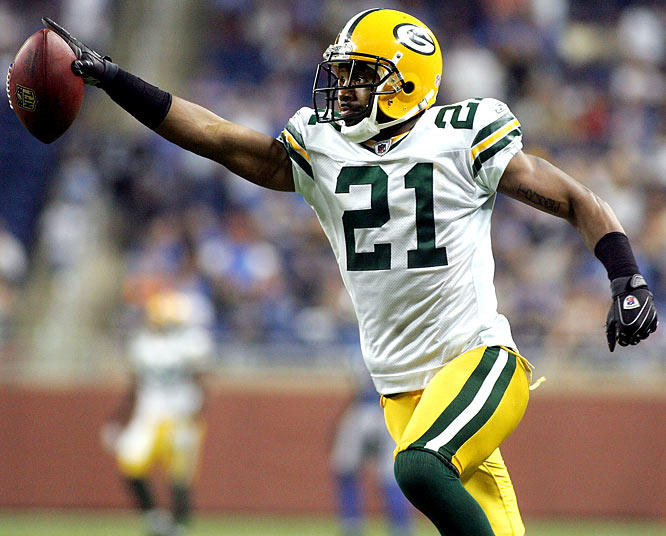
When you combine a swarming and pressuring defense like Green Bay’s with a quarterback like Kurt Warner, who likes to survey the field in the pocket, a recipe for disaster is brewing.  As great as he is, Warner has a habit of giving the ball away in the face of a fierce pass rush.  With Defensive Player of the Year candidate Charles Woodson (9 interceptions, 4 forced fumbles, 3 touchdowns) on the prowl, the Packers D will make some big plays.  The offense will too, rendering the Cardinals’ defense of their NFC crown a brief one.

Packers 29
Cardinals 24

Philadelphia Eagles (11-5) at Dallas Cowboys (11-5)

Every so often, there’s a wild-card game with Super Bowl implications for both teams. Saturday night the Eagles and Cowboys will clash for the second time in seven days and third this season.  The winner will have to be considered a favorite to come out of the NFC.

Judging from last week’s tilt, Dallas is the obvious choice in the rematch.  The Cowboys jumped on the Eagles from the beginning and dominated them at the point of attack throughout, piling up 179 yards on the ground while holding an excellent Philly pass rush to a pair of sacks.  The game was over by halftime.  Who’s to say the same thing isn’t going to happen again?  Bear with me.

First off, Donovan McNabb played an ugly game.  He didn’t put enough air under a deep pass to DeSean Jackson in the second quarter.  A sure touchdown and 7-7 tie would have been the result if not for the poor throw.  On the ensuing drive — after the Cowboys had taken a 14-0 lead — McNabb led the offense 67 yards to the Dallas 14 before fumbling a snap out of the shotgun and turning the ball over.  Ballgame.

To think McNabb will submit a similar performance in the playoffs is to both underestimate the quarterback and undervalue his track record.  Other than Tom Brady, McNabb is the only slinger this decade who has never lost a playoff opener.  He’s 6-0 in his career.  He’s also had success away from Philadelphia in January, winning three road playoff games, including in Minnesota and New York last year.  You will see a whole different Donovan McNabb come Saturday, which spells trouble for a Dallas secondary that Jackson has proven he has the jets to get behind (along with every other secondary in football).

Not to be forgotten is Brian Westbrook.  Since returning from a second concussion, he’s totaled 20 touches in two games.  Between the delicate nature of concussions and the fact that Philly’s postseason fate was never in question, there was no reason to rush him back.  Westbrook will be more significantly featured this time around, and at the very least, his presence should keep some of the Dallas edge rushers a little more at bay.

As golden of an opportunity as the Eagles blew in missing out on the second bye in the NFC last week, that loss swung all the pressure back onto Dallas.  Whereas — had they fallen to Philly in Week 17 — the Cowboys would have been a wild-card team not many expected to go on the road and win, they are now the prohibitive favorite of the weekend.  They’re hot, they’re at home and they’re playing a team they pushed around seven days ago.  Dallas is expected to win.

That could be a problem for a franchise that hasn’t won a playoff contest since 1996 and a quarterback who has so far experienced an inglorious run in the tournament.  A loss Saturday would drop Tony Romo to 0-3 in his postseason career and give the Cowboys seven consecutive defeats in January, which would be an NFL record.  The burden of expectation weighs especially heavy when history is not on your side.

One final note: Of the 19 times divisional opponents have met for a third time in the playoffs after one team swept the other in the regular season, 12 have made it a three-game sweep.  However, last year the Giants swept the Eagles in the regular season … and lost at home in the playoffs.  In 2007, the Cowboys swept the Giants, and yep, lost the rematch of the rematch at Texas Stadium.  Translation: In today’s NFC East, it is nearly impossible to pull off the trifecta.  These teams are all too balanced and know each other too well not to make the appropriate adjustments.

The Eagles are going to come out with a better gameplan — they are known to get crafty in the playoffs (hello, Michael Vick?) — and execute it far more soundly than last week.  The Cowboys will end up wilting under the pressure of a tight affair in the fourth quarter because whether or not they’ll acknowledge it, that monkey remains on their back.

Eagles 30
Cowboys 27